





What's Happening?
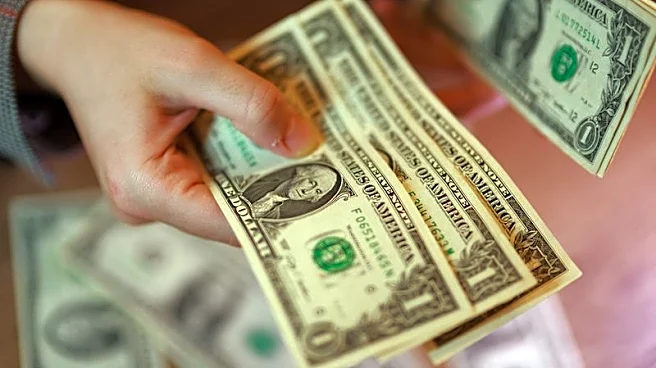
The U.S. dollar has reached near six-week lows as optimism grows over potential renewed talks between the U.S. and Iran. This development comes after President Trump indicated that discussions to end the ongoing conflict could resume in Pakistan. The dollar's
decline is attributed to increased risk appetite among investors, who are hopeful that diplomatic efforts might lead to a resolution. The Australian dollar, considered risk-sensitive, has reached its highest level since March 12, reflecting this sentiment. Meanwhile, the Japanese yen remains stable, and Bitcoin has seen a slight increase. The situation follows a blockade imposed by Washington on Iranian ports after previous negotiations failed, but the possibility of new talks has spurred a risk-on rally across various asset classes.
Why It's Important?
The potential resumption of talks between the U.S. and Iran is significant as it could lead to a de-escalation of tensions in the Middle East, impacting global oil prices and investor sentiment. A resolution could stabilize the region, potentially lowering oil prices and reducing the economic shock caused by the conflict. For the U.S., successful diplomacy might allow the administration to focus on domestic economic issues, particularly ahead of the midterm elections. The dollar's decline reflects a shift in investor confidence, with markets pricing in a temporary energy shock that could dissipate if diplomacy succeeds. This situation highlights the interconnectedness of geopolitical events and global financial markets.
What's Next?
If talks between the U.S. and Iran proceed, there could be a significant impact on global oil markets and financial stability. A successful resolution might lead to a decrease in oil prices, benefiting consumers and businesses reliant on energy. Conversely, failure to reach an agreement could prolong market volatility and maintain upward pressure on oil prices. Stakeholders, including political leaders and businesses, will closely monitor the situation, as the outcome could influence economic policies and market strategies. The U.S. administration may also leverage any diplomatic success to bolster its position domestically and internationally.