
What's Happening?
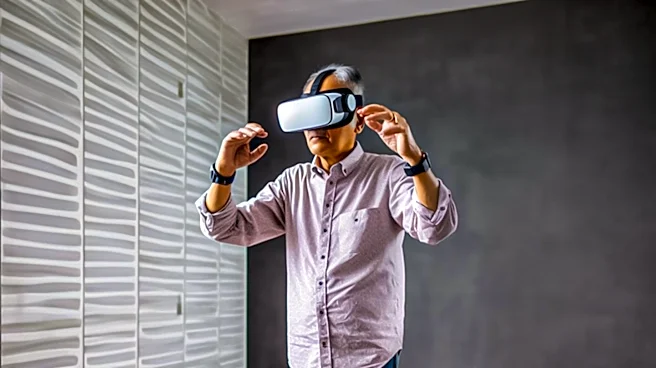
Mynd Immersive, a company specializing in virtual reality (VR) technology, is providing seniors in nursing homes with immersive experiences that transport them to various global destinations. The technology, demonstrated
at The New Jewish Home in Manhattan, allows users to virtually visit places like Florence and Paris, offering a sense of travel and exploration despite physical limitations. Originally developed for dementia and Alzheimer's treatment, Mynd's VR headsets are now used in over 800 healthcare facilities across the U.S., including retirement communities and VA medical centers. The headsets are designed to improve mood, reduce isolation, and enhance caregiver-patient relationships. Mynd's products are not classified as regulated medical devices, thus not requiring FDA approval.
Why It's Important?
The use of VR technology in elder care represents a significant advancement in addressing issues of isolation and mental health among seniors. By providing virtual travel experiences, Mynd's headsets offer a form of escapism and mental stimulation, which can be particularly beneficial for those with limited mobility. This technology also supports social interaction and memory care, potentially improving the quality of life for elderly residents. The broader implications include a shift in how technology can be integrated into healthcare to enhance patient experiences and outcomes. As the population ages, such innovations could play a crucial role in elder care, offering new ways to engage and support seniors.
What's Next?
Mynd Immersive plans to continue expanding its reach and refining its products to better serve dementia patients based on symptom severity. The company is also exploring partnerships with healthcare facilities to further integrate VR technology into therapeutic practices. As the technology evolves, there may be increased interest from insurance companies to cover such innovative treatments, potentially making them more accessible. Additionally, ongoing research and feedback will likely shape future developments, ensuring that the technology remains safe and effective for users.
Beyond the Headlines
The integration of VR technology in elder care raises questions about the balance between technological and human interaction. While VR can provide significant benefits, it is crucial to ensure that it complements rather than replaces personal connections. Ethical considerations include the potential for VR to evoke negative memories or cause disorientation among users. As the technology becomes more prevalent, it will be important to establish guidelines and training for caregivers to maximize its benefits while minimizing risks.