




What's Happening?
Former Alabama coach Nick Saban appeared before the Senate Commerce, Science and Transportation Committee to advocate for legislative reform in college sports. Saban emphasized the need for Congress to establish a national framework to address issues
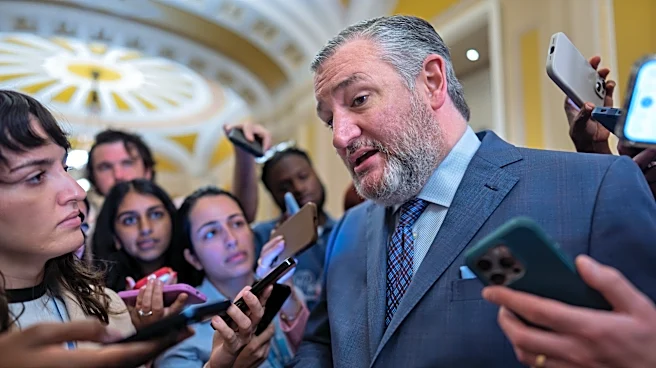
arising from the Name, Image, and Likeness (NIL) era and the transfer portal. He argued that without legal certainty, the current system risks drifting towards a professional model, with every rule potentially leading to lawsuits. Saban, along with other sports figures, supported the Protect College Sports Act, which aims to provide the NCAA with an antitrust exemption to enforce rules such as limiting athlete transfers and eligibility. The bill, a bipartisan effort by Senators Ted Cruz and Maria Cantwell, seeks to protect the integrity of college sports and ensure fair competition.
Why It's Important?
The push for federal legislation in college sports is significant as it addresses the growing complexities introduced by NIL deals and transfer freedoms. These changes have led to increased financial disparities among schools, potentially threatening the traditional collegiate sports model. The proposed bill aims to balance the rights of student-athletes to earn from their NIL while maintaining competitive fairness. By providing a legal framework, the bill could prevent the escalation of college sports into a 'mini-NFL' scenario, preserving the educational and developmental aspects of college athletics. The outcome of this legislative effort could have far-reaching implications for the future of college sports, affecting athletes, institutions, and the broader sports industry.
What's Next?
The Protect College Sports Act will require bipartisan support to pass, needing at least 60 votes in the Senate. The bill's sponsors, including Senators Cruz and Cantwell, are optimistic about its prospects, citing its bipartisan nature as a strength. However, opposition from major conferences like the SEC and Big Ten, which have expressed concerns over unresolved issues, could pose challenges. The bill's progress will be closely watched by stakeholders across the college sports landscape, as its passage could lead to significant changes in how college athletics are governed and operated.