





What's Happening?
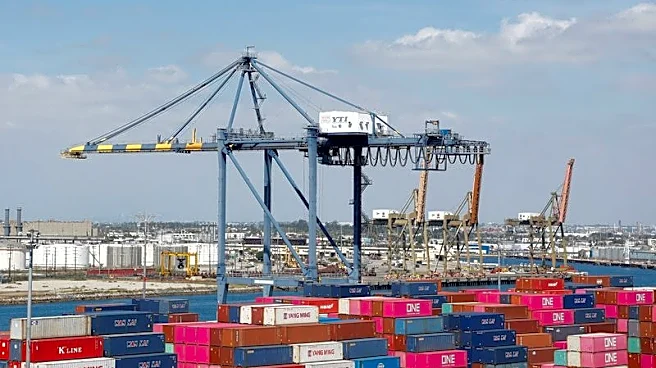
The U.S. Customs and Border Protection is set to begin processing refund requests for tariffs deemed unlawful by a recent Supreme Court decision. This follows the court's ruling that President Trump's use of the International Emergency Economic Powers
Law (IEEPA) to justify certain tariffs was invalid. Importers are advised to prepare for potential complications, as the Department of Justice has until early June to appeal the trade court's order for refunds, which could amount to approximately $166 billion. Customs will utilize a new digital tool to manage these refund requests, starting with cases that have not yet been liquidated or were liquidated within the last 80 days. Legal experts are urging importers to pursue multiple avenues to secure refunds, including filing protests and potentially taking legal action in the U.S. Court of International Trade.
Why It's Important?
This development is significant for U.S. importers who have been financially impacted by the tariffs imposed under the IEEPA. The potential refunds could provide substantial financial relief to businesses that have been burdened by these costs. However, the uncertainty surrounding the Department of Justice's potential appeal introduces a risk that could delay or complicate the refund process. The situation underscores the complex interplay between trade policy and legal frameworks, highlighting the challenges businesses face in navigating regulatory changes. The outcome of this process could set a precedent for how similar cases are handled in the future, affecting trade policy and economic relations.
What's Next?
Importers must decide whether to rely on the new refund process or pursue alternative legal actions, such as filing protests. The Justice Department's decision on whether to appeal will be a critical factor in determining the timeline and certainty of refunds. Businesses are advised to monitor the situation closely and consult with legal experts to protect their financial interests. The unfolding events may prompt further discussions on trade policy and the legal mechanisms available to challenge government-imposed tariffs.