








What's Happening?
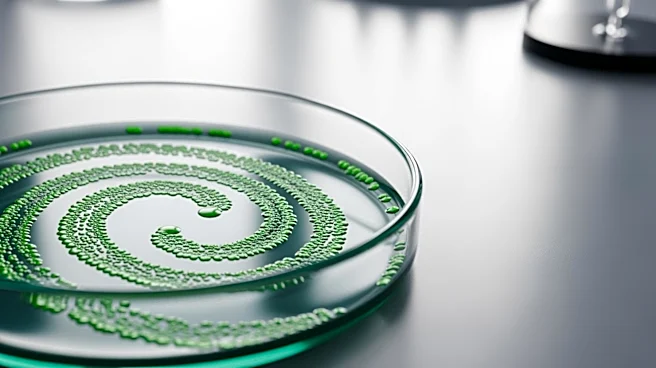
Researchers at Jiangnan University in China have successfully engineered Escherichia coli bacteria to produce gadusol, a natural compound found in fish eggs that offers protection against ultraviolet rays. This development could lead to the creation of a more
environmentally friendly sunscreen. Gadusol, which is naturally present in the eggs of zebrafish, salmon, and sturgeon, as well as in coral, is difficult to extract in large quantities from these organisms. By inserting genes from zebrafish into E. coli, the team was able to significantly increase gadusol production, achieving a yield of 4.2 grams per liter, up from 45.2 milligrams per liter. The compound has antioxidant properties similar to vitamin C and is transparent, making it an ideal candidate for sunscreen as it does not leave a white residue on the skin.
Why It's Important?
The development of gadusol as a sunscreen ingredient could have significant environmental benefits. Traditional sunscreens often contain chemicals that can harm marine ecosystems, particularly coral reefs. Gadusol, being a naturally occurring compound used by marine organisms, is likely to be safer for the environment. Additionally, its transparency addresses a common consumer complaint about the white cast left by many mineral sunscreens. If commercialized, gadusol-based sunscreens could offer a sustainable alternative that meets both environmental and consumer needs. This innovation also highlights the potential of biotechnology in creating eco-friendly solutions to everyday problems.
What's Next?
Before gadusol can be commercialized as a sunscreen, further research is needed to ensure its safety for human use and to develop a cost-effective manufacturing process. The challenge lies in creating a formulation that allows gadusol to adhere to the skin effectively without washing off easily. This will require advancements in material science to develop a suitable carrier for the compound. If these hurdles are overcome, gadusol could become a key ingredient in a new generation of sunscreens, potentially transforming the industry and setting a precedent for other biotechnological applications.