








What's Happening?
Gordon Gill, co-founder of the Chicago-based firm Adrian Smith + Gordon Gill Architecture, is advocating for a shift in architectural focus from constructing new skyscrapers to reimagining existing buildings. Despite his role in designing the Jeddah Tower,
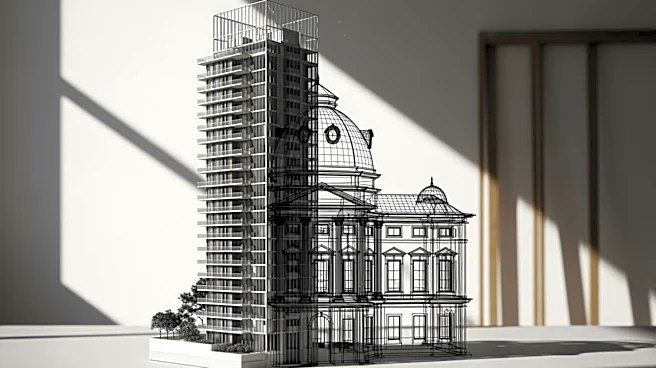
which will be the world's tallest building upon completion, Gill emphasizes the importance of sustainability and adaptive reuse of existing structures. He highlights that nearly half of America's 125 million buildings are over 50 years old, presenting a significant opportunity for innovation in the U.S. architectural landscape. Gill points out that reusing buildings can significantly reduce carbon emissions compared to new constructions, as it eliminates the need for new materials and the associated embodied carbon. He cites the renovation of the Willis Tower in Chicago as an example of successful sustainability upgrades, which earned the building a LEED Platinum designation.
Why It's Important?
Gill's perspective underscores a growing trend in the U.S. towards adaptive reuse and preservation-led development. This approach not only addresses environmental concerns by reducing carbon emissions but also revitalizes urban areas by maintaining the relevance of older buildings. The shift towards reimagining existing structures could lead to significant economic and environmental benefits, as it encourages sustainable practices and reduces the need for new construction materials. This trend also aligns with the increasing demand for conversions, as evidenced by the creation of nearly 25,000 apartments from repurposed buildings in 2024 alone. By focusing on existing building stock, architects can contribute to a more sustainable future while also enhancing the urban landscape.
What's Next?
The future of architecture in the U.S. may increasingly revolve around the adaptation and renovation of older buildings. As cities become denser, there will be a need to rethink public spaces and integrate new technologies, such as unmanned drones and air vehicles, into urban planning. This could lead to innovative designs that accommodate both vertical and horizontal movement within cities. Architects and urban planners will need to listen closely to the environments they serve and offer solutions that help communities move forward sustainably. The focus on existing structures could also inspire a ripple effect, encouraging neighboring buildings to adopt similar sustainability measures.
Beyond the Headlines
The emphasis on reimagining existing buildings rather than constructing new skyscrapers reflects a broader cultural shift towards sustainability and environmental responsibility. This approach challenges traditional notions of architectural achievement, which have often prioritized height and grandeur. By valuing the longevity and adaptability of existing structures, architects can contribute to a more sustainable and resilient urban environment. This shift also highlights the importance of creativity and innovation in addressing contemporary challenges, as architects are encouraged to find new uses for old spaces and integrate cutting-edge technologies into their designs.