






What's Happening?
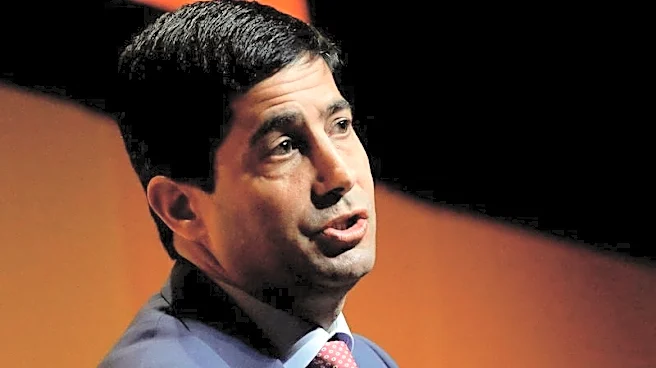
Kevin Warsh, the nominee for the Federal Reserve chair, has disclosed a wide array of investments in his recent financial filing. His holdings include significant stakes in Elon Musk's SpaceX and the predictions platform Polymarket. Warsh's assets are
valued at over $100 million, with major investments in the Juggernaut Fund LP, linked to his advisory role at the Duquesne Family Office. The disclosure highlights Warsh's interest in futuristic and emerging technologies, with investments in AI-driven platforms, crypto, fintech, and biotech. Notable mentions include Recraft, an AI vector art platform, and Outpace Bio, a company involved in protein engineering. Warsh's portfolio also includes investments in companies developing new vaccines and reversible male contraceptives, showcasing a diverse interest in both technology and health sectors.
Why It's Important?
Warsh's investment portfolio reflects a significant interest in cutting-edge technologies and innovations, which could influence his perspective as a potential Federal Reserve chair. His involvement in AI, crypto, and biotech suggests a forward-thinking approach that may impact future monetary policies, especially in regulating emerging financial technologies. The diversity of his investments indicates a broad understanding of various sectors, potentially benefiting the Federal Reserve's adaptability to technological advancements. Stakeholders in these industries might find Warsh's potential leadership encouraging, as it could lead to more informed and progressive policy-making. However, his financial ties to these sectors could also raise questions about conflicts of interest, necessitating transparency and careful scrutiny.
What's Next?
If confirmed as the Federal Reserve chair, Warsh's investment interests might prompt discussions on how the Fed will address the rapid evolution of technology in finance and other sectors. His leadership could influence the Fed's stance on digital currencies and AI integration in financial systems. Stakeholders, including policymakers and industry leaders, will likely monitor Warsh's decisions closely to gauge potential regulatory changes. The Senate confirmation process will be a critical next step, where Warsh's financial disclosures and potential conflicts of interest will be examined. His approach to balancing innovation with regulatory oversight will be pivotal in shaping the future of U.S. monetary policy.