






What's Happening?
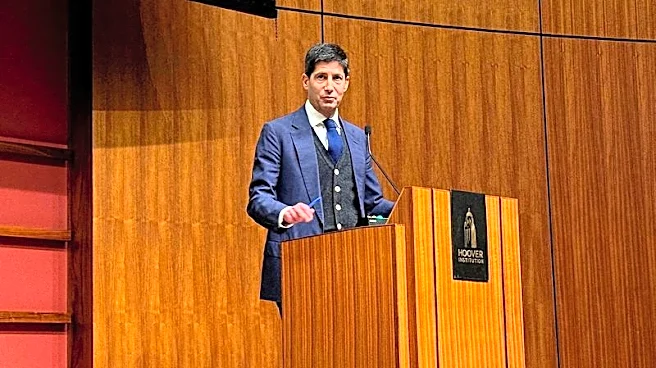
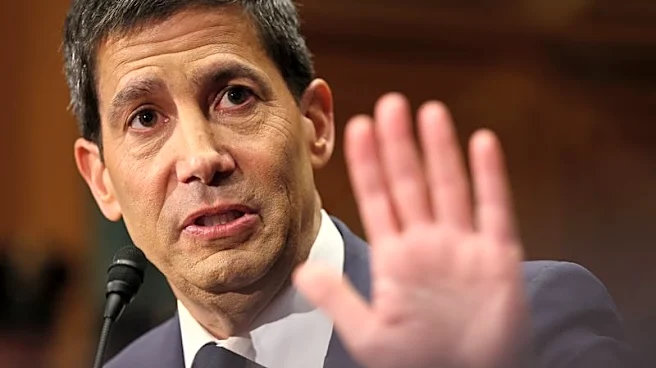
Kevin Warsh, nominated by President Trump to lead the Federal Reserve, addressed the Senate Banking Committee during his confirmation hearing. Warsh emphasized the need for a smaller Federal Reserve balance sheet, a move he believes would benefit the economy
by potentially lowering interest rates and improving inflation. He plans to collaborate with the Treasury Department to achieve this goal, although specifics on the implementation remain aspirational. Warsh's stance comes at a time when the Fed's balance sheet has expanded significantly, reaching $6.7 trillion, with projections suggesting it could grow to $10 trillion by 2035. His approach contrasts with the current Fed operations, which have maintained large holdings to stabilize financial markets and provide economic stimulus.
Why It's Important?
Warsh's proposal to reduce the Federal Reserve's balance sheet could have significant implications for U.S. monetary policy and economic stability. A smaller balance sheet might lead to lower interest rates, potentially stimulating economic growth and improving inflation control. However, it also poses challenges to the Fed's current interest rate management system, which relies on large holdings to maintain liquidity and control rates. The move could shift the balance of power between Wall Street and Main Street, as Warsh argues that large holdings disproportionately benefit financial markets. The political ramifications are also noteworthy, as the Fed's loss-making position due to large holdings could become a contentious issue.
What's Next?
If confirmed, Warsh's efforts to reduce the Fed's balance sheet will require careful coordination with the Treasury Department. Market participants are keenly observing how this collaboration will unfold, particularly in terms of Treasury debt issuance and asset sales. Warsh's approach suggests a gradual reduction, avoiding outright asset sales, which could destabilize markets. The emerging framework within the Fed indicates a potential pathway involving easing liquidity regulations and encouraging the use of central bank facilities to reduce demand for reserves. This strategy could allow the Fed to hold fewer assets while maintaining economic stability.