



What's Happening?
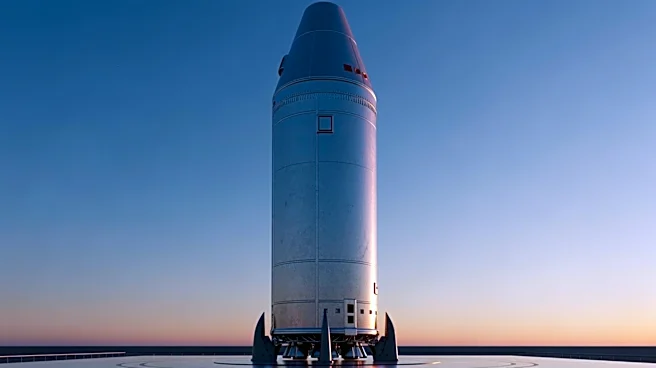
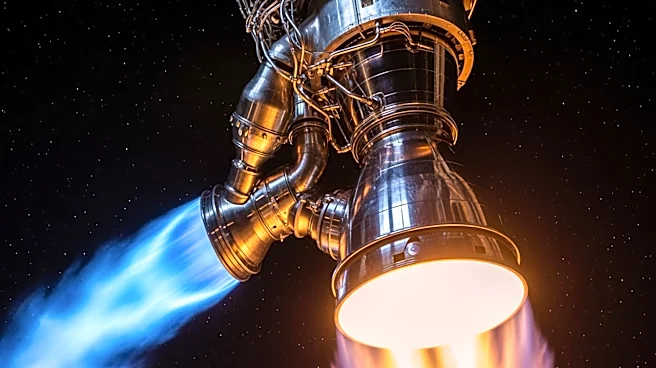
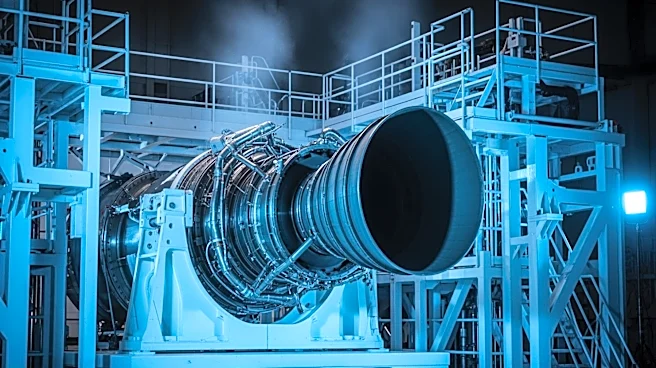
SpaceX has successfully conducted full-duration static fire tests on its Starship V3 upper stage and Super Heavy Booster 19 at Starbase, Texas. The tests, performed on April 15 and 16, involved igniting all six Raptor 3 engines on the Starship Ship 39
for 60 seconds and a 33-engine static fire on Booster 19. These tests are crucial steps towards the upcoming Flight 12, which will be the first to feature V3 hardware. The tests validated engine performance, propellant systems, and structural integrity, marking significant progress in SpaceX's development of reusable spacecraft for future missions.
Why It's Important?
These successful tests are pivotal for SpaceX as they pave the way for the debut of the Starship V3, which is designed to carry heavier payloads to low Earth orbit and beyond. The advancements in engine reliability and thrust capacity are critical for SpaceX's long-term goals, including supporting NASA's Artemis program and potential Mars missions. The ability to conduct high-cadence launches is essential for the company's plans to deploy Starlink satellites and other commercial payloads, enhancing global connectivity and space exploration capabilities.
What's Next?
SpaceX is preparing for the launch of Flight 12, expected in May 2026, which will test the V3 vehicle's orbital capabilities. The company is reviewing telemetry data to ensure engine reliability and safety before proceeding. The success of this flight could accelerate the certification process for crewed missions and demonstrate the feasibility of routine reusability, a key component of SpaceX's strategy to reduce space travel costs and increase mission frequency.