



What's Happening?
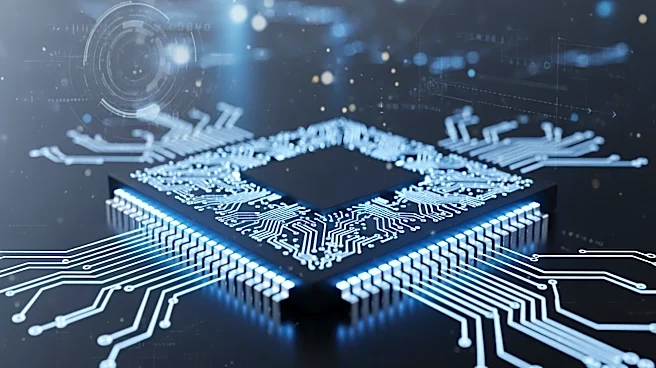
Alphabet has announced the release of its eighth generation tensor processor units (TPUs) at the Google Cloud Next conference. The new chips, TPU 8t and TPU 8i, are designed to enhance AI model training and inference capabilities. The TPU 8t offers nearly
three times the compute performance per pod compared to its predecessor, while the TPU 8i is optimized for latency-sensitive inference workloads. This development is part of a broader trend where companies like Alphabet and Amazon are investing heavily in custom chip technologies to support AI infrastructure. The announcement comes as the market shifts focus from geopolitical tensions to earnings and AI infrastructure capital expenditures, with stocks tied to data center buildouts seeing gains.
Why It's Important?
The introduction of these advanced TPUs by Alphabet signifies a significant step in the AI infrastructure landscape, potentially increasing the efficiency and scalability of AI applications. This move is expected to drive further investment in data centers, which are crucial for supporting the growing demand for AI services. Companies like Arm Holdings are poised to benefit from this trend, as the industry anticipates a surge in CPU spending. The development also highlights the strategic importance of custom chip technologies in maintaining competitive advantages in the AI sector, as seen with Alphabet's and Amazon's efforts.
What's Next?
As AI continues to expand, the demand for efficient and scalable data center solutions will likely increase. Companies involved in the production and supply of AI infrastructure components, such as BWX Technologies, which partners with GE Vernova, are expected to see growth opportunities. The focus on nuclear power as a clean energy source for data centers may also gain traction, addressing power bottlenecks in the AI industry. Additionally, upcoming earnings reports from major tech companies could provide further insights into the sector's trajectory.