





What's Happening?
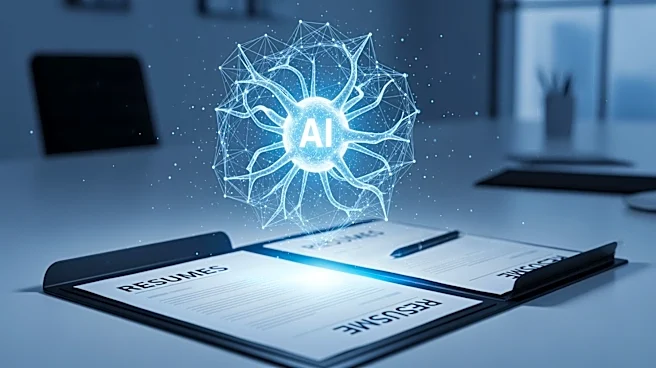
The integration of artificial intelligence (AI) in the hiring process is transforming how companies recruit talent, particularly in the insurance industry. As the workforce ages, companies are increasingly relying on AI to screen resumes and make hiring decisions.
This shift is not without controversy, as it raises questions about the ethical and legal implications of using AI in recruitment. The practice of using AI to both write and screen resumes has led to concerns about transparency and fairness. Additionally, the phenomenon of 'ghost job listings' and fake candidates further complicates the landscape. Experts in the field are examining the balance between leveraging AI for efficiency and maintaining human oversight to ensure ethical standards are met.
Why It's Important?
The use of AI in hiring processes has significant implications for the job market and the insurance industry. On one hand, AI can streamline recruitment, helping companies fill positions more efficiently amid a talent shortage. However, the reliance on AI also introduces risks, such as potential biases in algorithmic decision-making and the erosion of human accountability. These issues could lead to legal challenges and impact the reputation of companies that fail to address them. For insurers, understanding these risks is crucial, as they may need to underwrite policies that cover liabilities associated with AI-driven hiring practices. The broader societal impact includes potential shifts in employment patterns and the need for regulatory frameworks to govern AI use in recruitment.
What's Next?
As AI continues to play a larger role in hiring, companies will need to develop strategies to mitigate associated risks. This includes implementing best practices for maintaining human oversight and ensuring compliance with ethical and regulatory standards. The insurance industry, in particular, may see an increased demand for policies that address the liabilities of AI-driven recruitment. Additionally, there may be calls for more robust regulations to ensure transparency and fairness in AI applications. Stakeholders, including HR professionals and legal experts, will likely engage in ongoing discussions to navigate these challenges and develop solutions that balance innovation with responsibility.
Beyond the Headlines
The deeper implications of AI in hiring extend to cultural and ethical dimensions. The potential for AI to perpetuate biases or make decisions without human empathy raises questions about the role of technology in shaping workplace dynamics. As AI becomes more prevalent, there may be a cultural shift towards valuing technical efficiency over human judgment, which could impact how companies define success and employee value. Furthermore, the legal landscape may evolve to address new challenges posed by AI, such as data privacy concerns and the need for transparency in algorithmic decision-making. These developments could lead to long-term changes in how businesses operate and interact with their workforce.