


What's Happening?
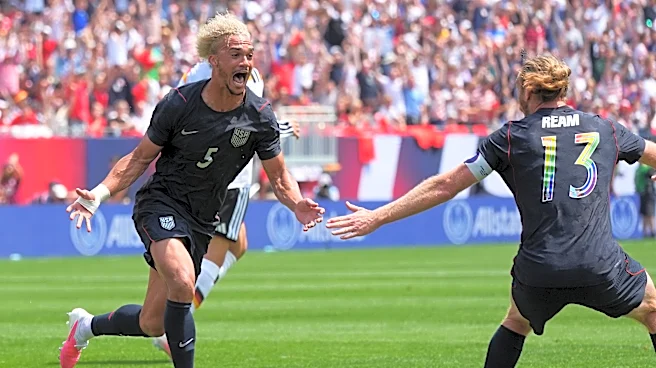
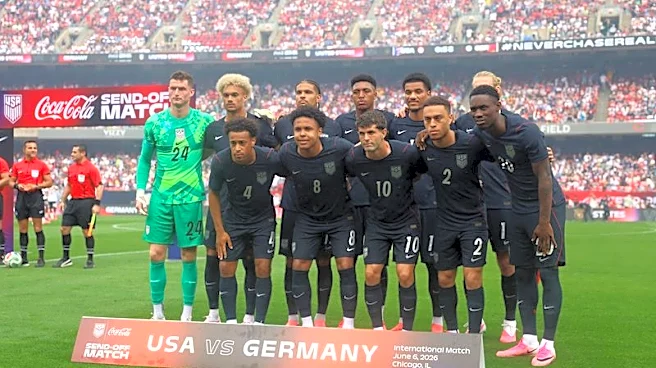
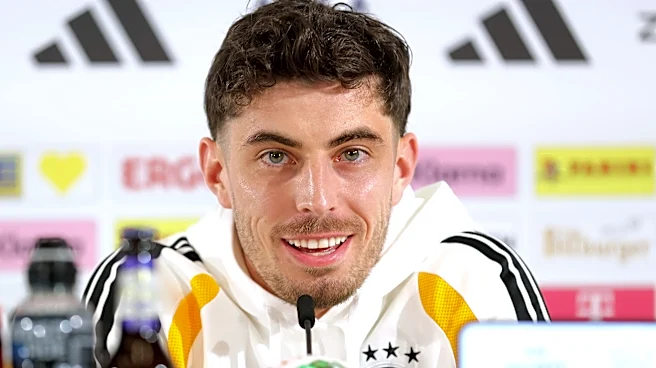
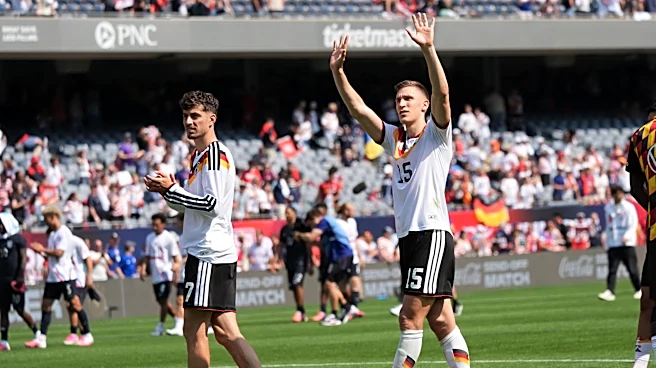
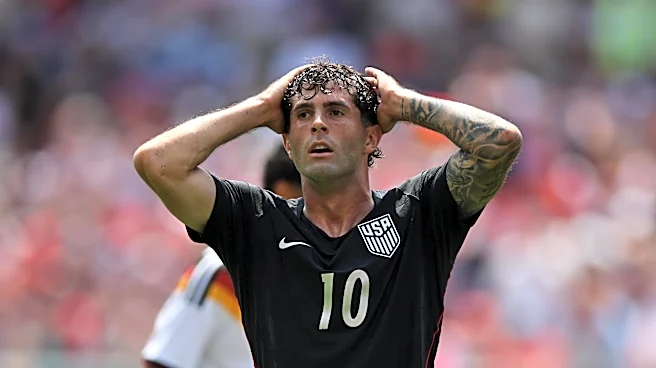
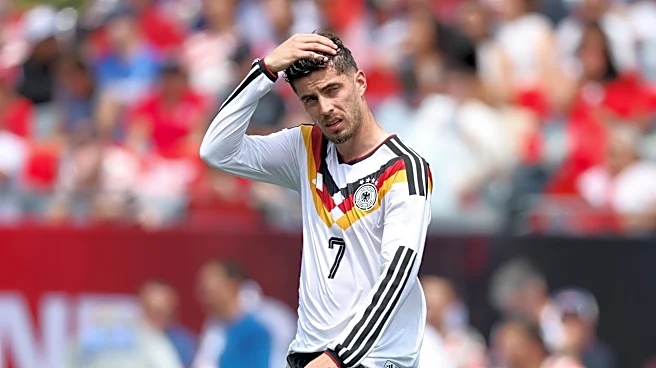
The United States Men's National Team (USMNT) faced Germany in an international friendly match at Soldier Field in Chicago, resulting in a 2-1 loss for the USMNT. Germany's Kai Havertz scored an early goal in the 2nd minute, setting the tone for a match largely
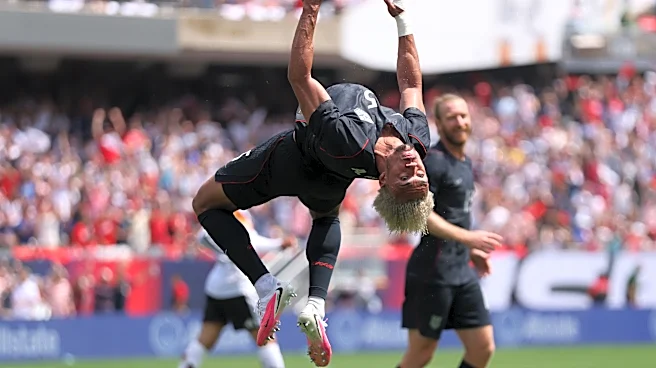
dominated by the German side. The USMNT responded with a goal from Antonee Robinson in the 37th minute, leveling the score before halftime. However, Leroy Sané's goal in the second half secured the victory for Germany. Both teams made several substitutions in the second half, allowing coaches to evaluate fringe players. Despite late attempts by the USMNT, including notable saves by Germany's Oliver Baumann, the score remained unchanged. Mauricio Pochettino, analyzing the match, highlighted the USMNT's resilience and the need for continued improvement in defensive strategies.
Why It's Important?
This match serves as a critical assessment point for the USMNT as they prepare for the upcoming World Cup. The team's ability to respond to an early setback and maintain competitive play against a strong German side is a positive takeaway. However, the loss underscores areas needing improvement, particularly in defensive coordination and capitalizing on scoring opportunities. For Germany, the victory extends their winning streak and boosts confidence ahead of future international competitions. The match also provided both teams with valuable insights into player performances and tactical adjustments needed for upcoming tournaments.
What's Next?
The USMNT will focus on refining their strategies and addressing weaknesses identified during the match as they prepare for their World Cup opener against Paraguay in Los Angeles. The coaching staff will likely emphasize defensive drills and finishing techniques to enhance the team's competitiveness. Germany, on the other hand, will continue their preparations with an eye on maintaining their winning momentum and further integrating their tactical plans. Both teams will analyze match footage to make necessary adjustments and optimize player roles for future engagements.