





What's Happening?
Georg Baselitz, a renowned German artist known for his provocative and upside-down paintings, has died at the age of 88. Baselitz, born Hans-Georg Kern, was a significant figure in the Neo-expressionist movement and was celebrated for his innovative approach
to art. He was represented by the Thaddaeus Ropac Gallery, which announced his peaceful passing, though the cause of death was not disclosed. Baselitz's career was marked by his departure from East Germany in 1957 amid political tensions, and his subsequent rise to fame in the art world. His first exhibition in 1963 was controversial, with some works being confiscated for alleged obscenity. Baselitz's unique style, characterized by inverted images, challenged conventional artistic norms and earned him international acclaim. His works are displayed in major galleries worldwide and have fetched millions at auctions.
Why It's Important?
Georg Baselitz's contributions to the art world have had a lasting impact, particularly in challenging traditional perspectives and encouraging a re-evaluation of artistic norms. His approach to painting, which often involved inverting images, not only redefined visual art but also influenced a generation of artists who followed. Baselitz's work is significant in the context of post-World War II Germany, as it reflects the cultural and societal upheavals of the time. His ability to provoke thought and discussion through art has cemented his status as a pivotal figure in contemporary art. The loss of Baselitz marks the end of an era for the Neo-expressionist movement, but his legacy continues to inspire and influence artists and art enthusiasts globally.
What's Next?
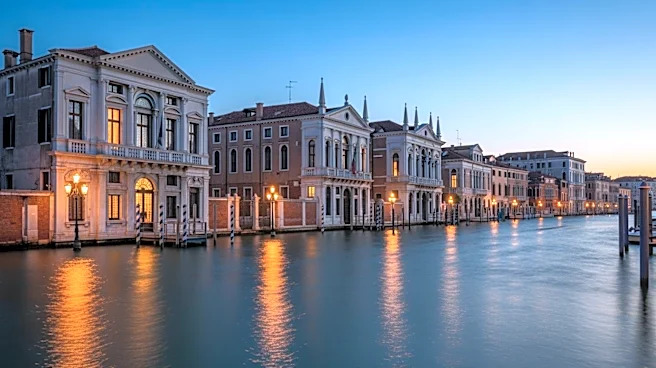
In the wake of Georg Baselitz's passing, the art community is likely to reflect on his contributions and the ways in which his work has shaped modern art. Exhibitions of his work, such as the ongoing display at the Giorgio Cini Foundation in Venice, will continue to draw attention and offer opportunities for new audiences to engage with his art. Additionally, art historians and critics may revisit Baselitz's influence on the Neo-expressionist movement and his role in the broader context of 20th-century art. The market for Baselitz's work may also see increased interest, as collectors and institutions seek to acquire pieces from his influential career.
Beyond the Headlines
Georg Baselitz's art not only challenged aesthetic conventions but also engaged with deeper themes of identity, history, and the human condition. His work often reflected the tumultuous history of Germany, particularly the impact of World War II and the division of East and West Germany. Baselitz's exploration of these themes through his art provided a means of processing and understanding the complex socio-political landscape of his time. His legacy extends beyond his paintings, as he leaves behind a body of work that continues to provoke thought and inspire dialogue about the role of art in society.