
What's Happening?
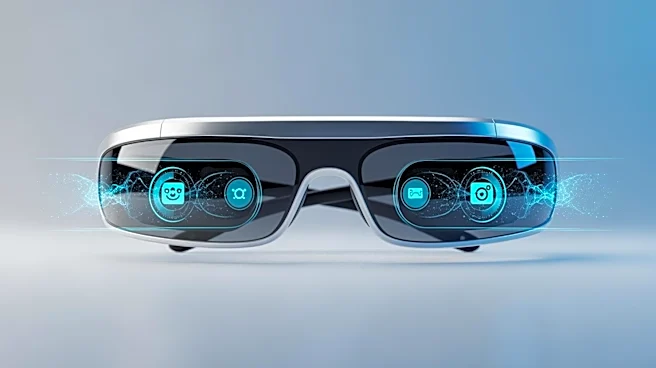
In 2026, major tech companies are introducing augmented reality (AR) glasses that could significantly alter how consumers interact with digital content. Meta has launched Ray-Ban smart glasses priced at $499,
targeting mainstream consumers. Snap has spun off its Specs unit to focus on lightweight, social-first AR glasses. Google and Warby Parker are collaborating on AI-powered spectacles, while Amazon is reportedly developing its own AR glasses. These products aim to shift daily tasks from phone screens to wearable devices, offering features like notifications and AI assistants.
Why It's Important?
The introduction of AR glasses by major tech companies marks a potential shift in consumer technology, moving away from traditional smartphones to wearable devices. This could impact the smartphone market, as consumers may opt for AR glasses for convenience and new functionalities. The competition among tech giants like Meta, Snap, Google, and Amazon could drive innovation and lower prices, making AR technology more accessible. This shift could also influence app development, privacy concerns, and the integration of AI in daily life.
What's Next?
As these AR glasses enter the market, consumer adoption will be crucial in determining their success. Companies will likely focus on improving battery life, privacy features, and app ecosystems to enhance user experience. The response from consumers and developers will shape the future of AR technology, potentially leading to further innovations and new applications. The success of these products could also prompt other tech companies to enter the AR market, increasing competition and driving further advancements.