
What's Happening?
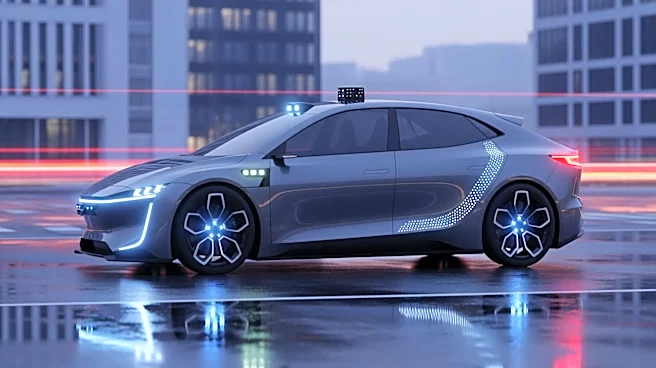
Uber has announced plans to deploy 500 Hyundai Ioniq 5 vehicles globally this year, equipped with advanced sensors to collect high-fidelity data for autonomous driving. This initiative is part of Uber's
strategy to develop a comprehensive dataset for its autonomous vehicle (AV) partners, including Avride, Waymo, and WeRide. The vehicles will be fitted with 14 cameras, eight solid-state lidar sensors, and nine radars, with data processed through Nvidia's Dual Drive Thor computer. This marks a significant step for Uber's AV Labs division, which aims to create the world's most geographically diverse training data for self-driving technology. The company has already collected data from thousands of vehicles in various cities, and this new fleet is expected to gather 2 million miles of data per month.
Why It's Important?
This development underscores Uber's commitment to advancing autonomous vehicle technology, a sector poised to revolutionize transportation. By creating a robust dataset, Uber aims to enhance the capabilities of its AV partners, potentially accelerating the deployment of self-driving cars. This move could position Uber as a key player in the autonomous vehicle industry, offering a platform for various AV technologies. The initiative also reflects a broader industry trend towards data-driven development in autonomous driving, which could lead to safer and more efficient transportation solutions. Stakeholders in the automotive and tech industries stand to benefit from these advancements, as they could lead to new business opportunities and technological innovations.
What's Next?
Uber plans to have 50 of these data-collection vehicles operational by the summer, with the full fleet expected to be deployed by the end of the year. The company will continue to refine its sensor suite based on partner needs, indicating ongoing collaboration and adaptation in its AV strategy. As Uber expands its data collection efforts, it may attract more partners and investments, further solidifying its role in the autonomous vehicle ecosystem. The success of this initiative could influence regulatory discussions and public perception of self-driving technology, potentially paving the way for broader acceptance and integration of autonomous vehicles in urban environments.