
What's Happening?
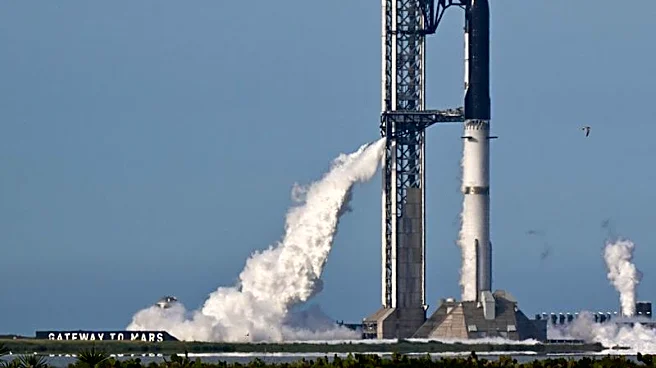
SpaceX is preparing for its next Starship test flight, emphasizing the vehicle's importance to its growth ambitions. The company plans to launch Starship on its 12th integrated test flight from Starbase,
Texas. This will be the first flight of version 3 of Starship and its Super Heavy booster, featuring design changes to enhance performance. SpaceX has invested over $15 billion in the Starship program, with significant spending in recent years. The company aims to use Starship for orbital launches, including deploying Starlink satellites and serving as NASA's Human Landing System lunar lander. SpaceX's prospectus highlights the vehicle's role in achieving its goals in AI and connectivity, with a total addressable market estimated at $28.5 trillion. The success of Starship is crucial for deploying next-generation satellites and achieving global satellite-to-mobile connectivity.
Why It's Important?
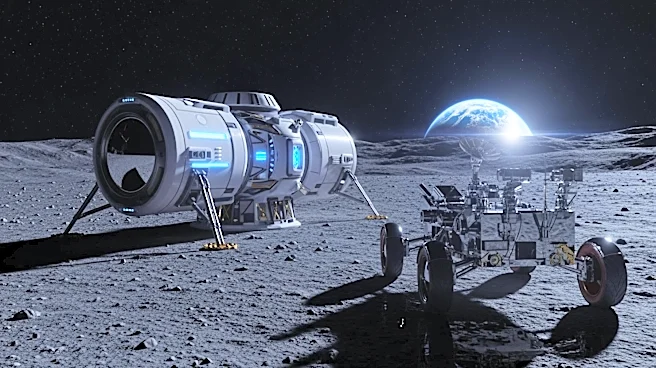
The development and success of SpaceX's Starship are pivotal for the company's future growth and strategic goals. Starship's ability to launch and deploy next-generation satellites is essential for SpaceX's plans in AI and connectivity, which represent a significant portion of its market potential. The vehicle's reusability and launch cadence are critical for reducing costs and meeting deployment timelines. Any delays or failures in Starship's development could impact SpaceX's business operations and financial prospects. Additionally, Starship's success could open new opportunities, such as lunar industries and mining rare materials on the moon, positioning it as a strategic industrial node.
What's Next?
SpaceX plans to commence payload delivery to orbit with Starship in the second half of 2026. The company aims to achieve significant milestones, including demonstrating in-space refueling and achieving high-cadence launch operations. These developments are necessary for SpaceX to execute its growth strategy and expand its satellite and AI services. The company will continue to invest in Starship's production and the development of high-rate launch sites. Achieving these goals will require overcoming challenges related to vehicle reusability, regulatory tolerance, and operational reliability.