


What's Happening?
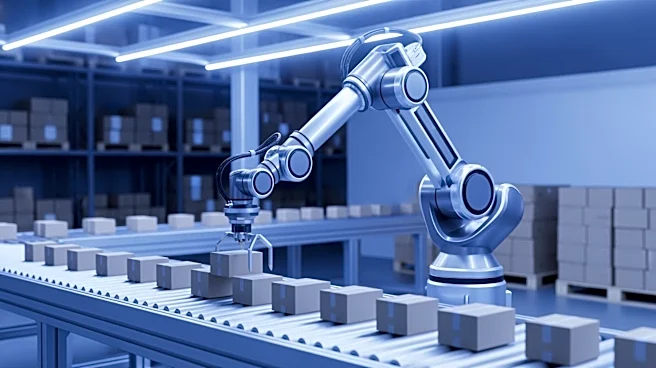
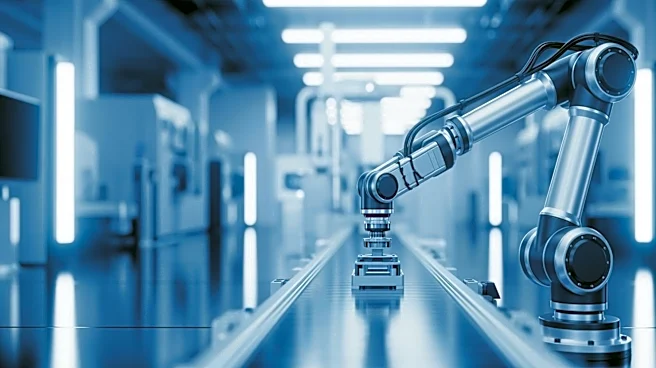
Flex, a leading contract manufacturer, is advancing its automation capabilities through an expanded partnership with Teradyne Robotics. This collaboration involves deploying robotics solutions within Flex's facilities and manufacturing key components
for Teradyne's global customers. The move is part of a broader industry trend where manufacturers are increasingly adopting automation to enhance productivity, quality, and resilience amid growing product complexity. Rodrigo DallOglio, president of operational excellence and transformation at Flex, highlights the company's strategy of moving from pilot projects to large-scale implementation of technologies like collaborative robots and autonomous mobile robots (AMRs). These technologies are crucial for balancing flexibility with standardization in manufacturing processes, addressing labor shortages, and meeting efficiency demands.
Why It's Important?
The expansion of automation in manufacturing is significant as it addresses several critical challenges faced by the industry, including labor shortages and supply chain uncertainties. By integrating advanced robotics, Flex aims to improve operational flexibility and resilience, which are essential for maintaining competitiveness in a rapidly evolving market. The partnership with Teradyne Robotics not only enhances Flex's internal operations but also positions the company as a key player in the global supply chain for robotics components. This development reflects a shift towards more adaptable and scalable manufacturing systems, which can lead to increased efficiency and reduced production costs, benefiting both manufacturers and consumers.
What's Next?
As Flex continues to scale its automation efforts, the focus will likely be on refining and standardizing successful pilot projects for broader implementation across its global operations. The company may also explore further collaborations with technology partners to enhance its robotics capabilities. Industry stakeholders, including other manufacturers and technology providers, will be closely monitoring Flex's progress as a model for integrating automation at scale. The success of these initiatives could influence broader adoption of similar technologies across the manufacturing sector, potentially leading to significant shifts in production strategies and workforce dynamics.
Beyond the Headlines
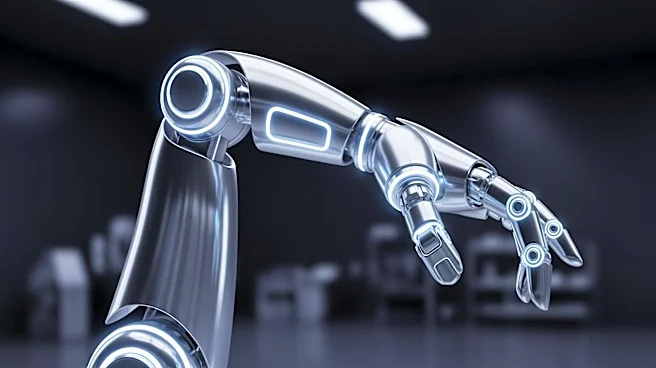
The integration of physical AI in manufacturing, as discussed by Rodrigo DallOglio, represents a transformative shift in how factories operate. While fully autonomous systems are still in development, the current use of AI-enabled robotics is already making manufacturing processes more adaptable and efficient. This evolution could lead to a redefinition of job roles within the industry, with a greater emphasis on managing and maintaining advanced technologies. Additionally, the ethical implications of increased automation, such as job displacement and data privacy, will need to be addressed as these technologies become more prevalent.