





What's Happening?
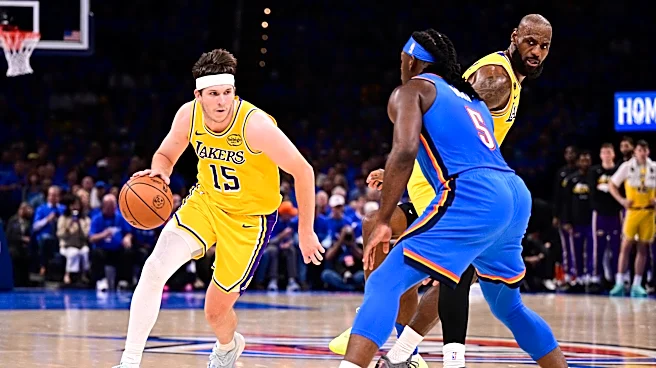
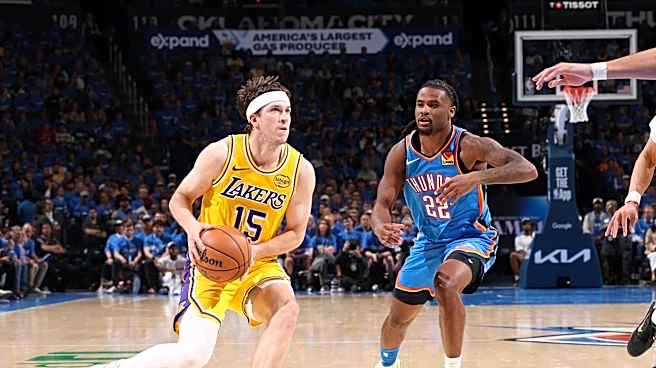
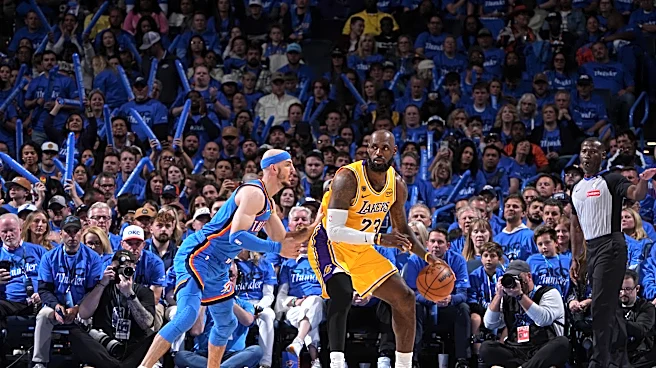
Los Angeles Lakers head coach JJ Redick and player Austin Reaves expressed their dissatisfaction with the officiating following a 125-107 loss to the Oklahoma City Thunder in Game 2 of the Western Conference semifinals. Redick criticized the lack of foul
calls for star player LeBron James, who has only had five free-throw attempts in the first two games of the series. Redick argued that James, despite being a four-time NBA MVP, is not receiving the calls he deserves due to his physical style of play. Meanwhile, Reaves confronted crew chief John Goble after the game, feeling disrespected by Goble's reaction during a jump-ball situation. Reaves, who scored 31 points in the game, felt that the officiating was unfair and that he was treated disrespectfully by the officials.
Why It's Important?
The criticism from Redick and Reaves highlights ongoing concerns about officiating consistency in the NBA, particularly regarding how star players like LeBron James are officiated. This issue can impact the outcome of games and the overall fairness of the competition. For the Lakers, who are down 2-0 in the series, the perceived lack of fair officiating could affect team morale and performance. The broader implications for the NBA include potential scrutiny over officiating standards and the need for possible reforms to ensure fair play. This situation also underscores the challenges referees face in maintaining authority and respect on the court.
What's Next?
The Lakers will host Game 3 of the series on Saturday, providing them an opportunity to regroup and potentially address their concerns with the league. The team's response to the officiating and their performance in the upcoming games will be crucial in determining their chances of advancing in the playoffs. The NBA may also review the officiating of the series to address any inconsistencies and ensure fair play moving forward. Stakeholders, including fans and analysts, will be watching closely to see how the league and the teams involved respond to these criticisms.