



What's Happening?
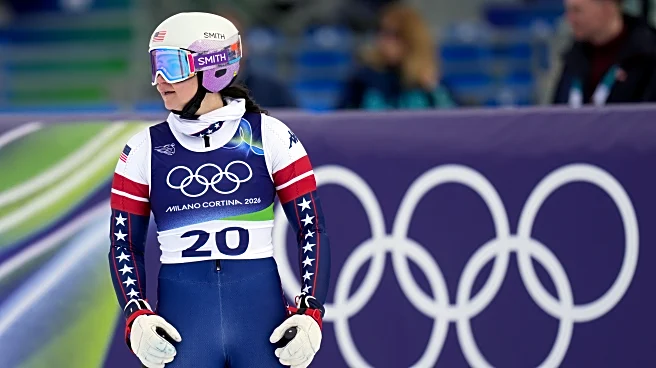
U.S. skier Lindsey Vonn is competing in the Milan-Cortina Winter Olympics despite suffering a complete rupture of her ACL, along with meniscus and bone damage, in a recent crash. At 41, Vonn is pushing her physical limits, wearing a brace to protect her injured knee during downhill training runs. Her determination to compete has astonished fellow athletes and experts, given the severity of her injury. Vonn's resilience and high pain threshold are highlighted as she prepares to race in the women's downhill event, aiming to close out her career with a remarkable comeback.
Why It's Important?
Vonn's participation in the Olympics despite her injury is a testament to her extraordinary resilience and determination. Her story inspires athletes and fans worldwide, showcasing
the mental and physical strength required to compete at the highest level. Vonn's comeback could influence perceptions of injury recovery and the capabilities of athletes facing physical challenges. Her decision to race may also impact discussions on athlete safety and the pressures of competitive sports.
What's Next?
Vonn is scheduled to compete in multiple events, including the downhill and super-G, despite her injury. Her performance will be closely watched, and her success could redefine expectations for athletes recovering from severe injuries. The outcome of her races may influence future training and rehabilitation approaches for injured athletes. Vonn's story could also spark conversations about the support systems available to athletes facing similar challenges.
Beyond the Headlines
Vonn's journey highlights the psychological aspects of sports, including the mental coaching and support required to overcome setbacks. Her ability to separate her identity from skiing and embrace the sport again underscores the importance of mental health in athletic careers. Vonn's story may encourage discussions on the role of mental resilience in achieving success and the need for comprehensive support for athletes.