





What's Happening?
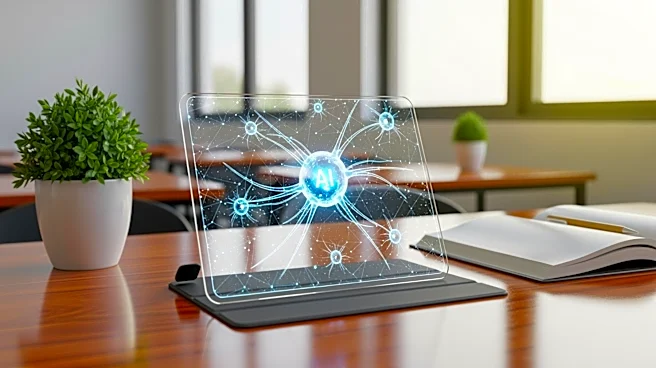
McGraw Hill has announced the introduction of new artificial intelligence (AI) capabilities within its Connect digital learning and course management solution for higher education. The enhancements include a conversational AI tutor named Learning Coach,
which is designed to provide real-time support to students as they tackle challenging concepts. Developed in collaboration with Kyron Learning, the Learning Coach uses video and text to offer explanations and guided questioning, adapting to each student's needs. Additionally, a new Translation Tool will be available for most Connect eBook titles, supporting 38 languages to aid multilingual learners. The platform also introduces AI literacy learning modules to help students understand and apply AI responsibly.
Why It's Important?
The integration of AI into educational platforms like McGraw Hill's Connect represents a significant shift towards personalized and adaptive learning experiences in higher education. By providing real-time support and resources tailored to individual student needs, these AI capabilities can enhance learning outcomes and help students develop critical thinking skills. The focus on AI literacy is particularly relevant as it prepares students for a workforce increasingly influenced by AI technologies. This development could potentially set a precedent for other educational institutions to adopt similar AI-driven tools, thereby transforming the landscape of digital education.
What's Next?
As McGraw Hill rolls out these AI capabilities, educational institutions and instructors will likely evaluate the effectiveness of these tools in improving student engagement and comprehension. The success of the Learning Coach and other AI features could lead to broader adoption across various educational platforms. Additionally, the emphasis on AI literacy may prompt other educational providers to incorporate similar modules, fostering a generation of students well-versed in AI applications. Stakeholders in the education sector will be closely monitoring the impact of these innovations on teaching methodologies and student performance.