







What's Happening?
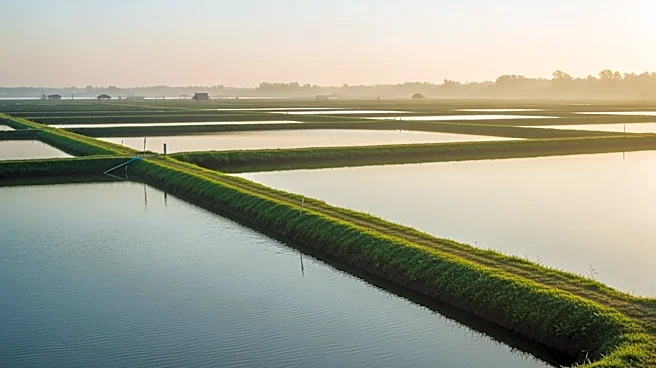
The Punjab government is actively working on transforming barren lands into economic zones through the Blue Economy Programme, focusing on shrimp farming projects. Chief Minister Maryam Nawaz announced significant progress in infrastructure development
for shrimp farming in Sargodha Estate, Aliwala, and Shahgarh. In Sargodha, 118 ponds have been excavated, and 116 tubewells have been bored, with land clearing and surveying completed over 365 acres. The construction of a warehouse is nearly complete, and work on the admin block and feed store is ongoing. The Aliwala shrimp estate has seen 90% of its 1,267 acres cleared, with 642 ponds excavated and significant progress on the drainage system. At Shahgarh, work on water supply, electrification, and road construction is nearing completion. The initiative aims to rehabilitate barren lands, create jobs, and enhance exports by promoting aquaculture and shrimp farming to international standards.
Why It's Important?
This initiative is crucial for Punjab's economic development, as it aims to utilize unused lands for productive purposes, thereby boosting the local economy. By focusing on shrimp farming, the government is tapping into a lucrative market with significant export potential. The project is expected to create numerous employment opportunities, contributing to the reduction of unemployment in the region. Additionally, by adopting modern scientific methods for shrimp farming, the initiative promises to improve the quality and yield of shrimp to meet international standards, potentially increasing Punjab's competitiveness in the global seafood market. This development aligns with broader efforts to promote sustainable economic growth and resource utilization in the province.
What's Next?
The continued development of these shrimp farming projects will likely involve further infrastructure enhancements and the implementation of advanced aquaculture techniques. As the projects progress, the government may seek to attract private investment and partnerships to expand the initiative's scope and impact. Monitoring and evaluation of the project's outcomes will be essential to ensure that the objectives of economic revitalization and employment generation are met. Additionally, the success of these projects could serve as a model for similar initiatives in other regions, promoting sustainable aquaculture practices across the country.