


What's Happening?
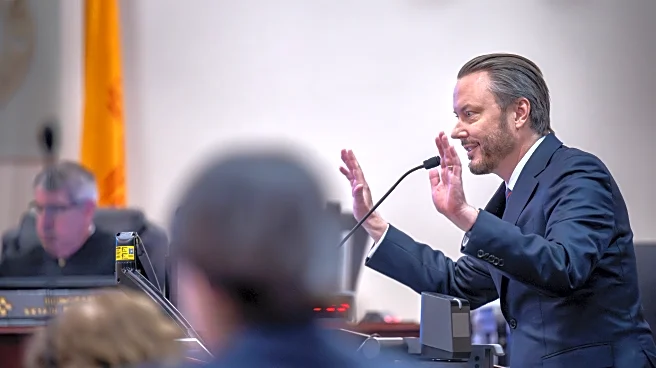
Meta, the parent company of Facebook and Instagram, has been ordered to pay $375 million following a lawsuit in New Mexico. The lawsuit, initiated by state prosecutors, accused Meta of failing to protect children from sexual exploitation on its platforms.
The trial, which lasted seven weeks, concluded with a jury finding Meta guilty of prioritizing profits over safety, violating the state's Unfair Practices Act. The penalty, which is the maximum allowed by law at $5,000 per violation, is a significant legal defeat for Meta. Despite the financial penalty, which represents a small fraction of Meta's annual revenue, the company's stock rose by 5% following the verdict. New Mexico Attorney General Raúl Torrez described the verdict as a historic victory for child safety, criticizing Meta for ignoring internal warnings about the harm its platforms could cause to children.
Why It's Important?
This legal outcome underscores the growing scrutiny and legal challenges faced by major tech companies regarding user safety, particularly for minors. The case highlights the tension between corporate profit motives and consumer protection, especially in the digital space where children are increasingly vulnerable. The financial penalty, although substantial, is relatively minor compared to Meta's overall revenue, raising questions about the effectiveness of such fines in enforcing corporate accountability. The verdict may encourage other states to pursue similar legal actions, potentially leading to more stringent regulations and oversight of social media platforms. This case also reflects broader societal concerns about the role of technology companies in safeguarding user welfare, particularly for younger audiences.
What's Next?
Following the verdict, the trial will enter a new phase in May, where additional financial penalties and court-mandated changes to Meta's platforms may be sought. Meta has stated its intention to continue defending its practices, asserting confidence in its record of protecting teens online. The outcome of this next phase could set a precedent for how tech companies are regulated and held accountable for user safety. Stakeholders, including policymakers and child advocacy groups, will likely monitor the developments closely, potentially influencing future legislation aimed at enhancing online safety standards.