






What's Happening?
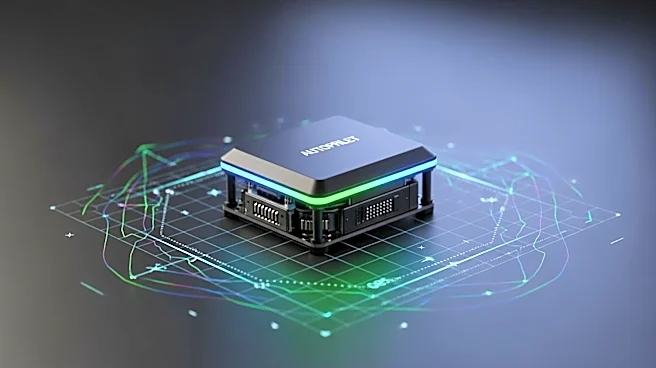
UAV Navigation–Grupo Oesía has introduced the VECTOR-300, a high-performance autopilot system designed for loitering munitions and counter-unmanned aerial systems (C-UAS) interceptors. This new system is tailored to meet the industrial demands of attritable
unmanned aerial systems by integrating advanced guidance, navigation, and control capabilities. The VECTOR-300 is engineered to support mass production, offering a streamlined design that reduces technical complexity while ensuring consistent performance across large-scale deployments. It is specifically built to operate in GNSS-denied environments, utilizing advanced inertial algorithms and multi-sensor fusion to resist electronic warfare tactics such as jamming and spoofing. The system also supports AI-based target identification and optical data integration, allowing for real-time trajectory adjustments during missions.
Why It's Important?
The introduction of the VECTOR-300 autopilot is significant for the defense industry, particularly in enhancing the capabilities of unmanned aerial systems (UAS) in contested environments. By providing a solution that can operate effectively without reliance on GNSS, the VECTOR-300 addresses a critical vulnerability in modern warfare where electronic warfare tactics are prevalent. This development could lead to increased adoption of UAS in military operations, offering a scalable and resilient option for defense strategies. The ability to integrate AI and optical data further enhances the precision and adaptability of these systems, potentially transforming how military forces engage with dynamic and static targets. The VECTOR-300's compatibility with third-party platforms and sensors also promotes interoperability, aligning with global defense industrial strategies.
What's Next?
UAV Navigation plans to showcase the VECTOR-300 at Xponential 2026 in Detroit, providing an opportunity for industry stakeholders to explore its capabilities firsthand. The system's open and modular architecture suggests potential for future upgrades and integration with emerging technologies, which could further enhance its operational effectiveness. As defense agencies and contractors evaluate the VECTOR-300, there may be increased interest in adopting this technology for various military applications, potentially influencing procurement decisions and strategic planning. The focus on GNSS-denied capabilities may also drive further research and development in this area, as the demand for resilient and adaptable UAS solutions continues to grow.