



What's Happening?
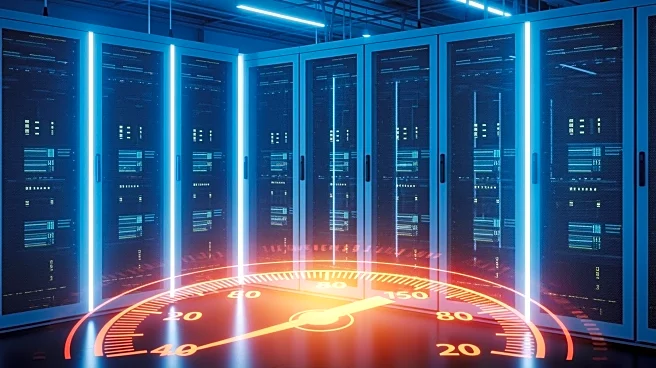
Federal Reserve Chair Jerome Powell has acknowledged that the rapid expansion of AI-driven data centers is contributing to inflation. During a press conference, Powell explained that the construction of data centers is exerting pressure on various goods
and services, thereby pushing inflation upward. This statement counters the popular belief that artificial intelligence should be reducing prices through productivity gains. Powell noted that while the Fed has observed significant productivity increases over the years, the immediate impact of AI on inflation remains uncertain. He emphasized that the demand for data centers is outpacing the productivity benefits, which could raise the neutral interest rate in the short term rather than lower it. Powell's comments come amid concerns that consumer electricity prices could rise significantly due to the strain data centers place on the power grid.
Why It's Important?
Powell's remarks underscore the complex relationship between technological advancements and economic indicators like inflation. The expansion of data centers, driven by AI, is not only a technological milestone but also a significant economic factor affecting consumer costs. As utilities seek substantial rate increases, lower-income households may disproportionately bear the financial burden. This situation highlights the need for careful consideration of infrastructure development and its economic implications. The Fed's cautious approach reflects the uncertainty surrounding AI's long-term impact on productivity and inflation. Understanding these dynamics is crucial for policymakers and stakeholders as they navigate the challenges posed by rapid technological growth.
What's Next?
The Federal Reserve's decision to hold interest rates steady suggests a wait-and-see approach as it monitors the evolving impact of AI and data centers on the economy. Future adjustments to interest rates may depend on how quickly productivity gains from AI materialize and whether they can offset inflationary pressures. Stakeholders, including utility companies and consumers, will likely continue to grapple with the financial implications of data center expansion. Policymakers may need to address infrastructure challenges to ensure that the power grid can accommodate growing demand without exacerbating costs for consumers.
Beyond the Headlines
The development of data centers raises broader questions about sustainability and energy consumption. As demand for data centers grows, so does the need for efficient energy solutions to mitigate environmental impacts. The interplay between technological progress and environmental stewardship will be a critical area of focus for industry leaders and policymakers. Additionally, the ethical considerations of AI's role in economic disparities warrant attention, as technological benefits may not be evenly distributed across different socioeconomic groups.