

What's Happening?
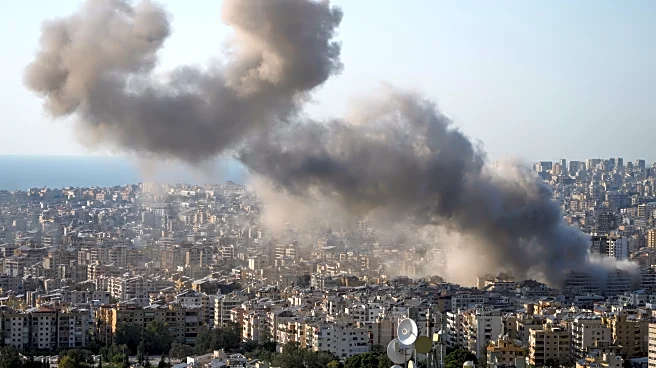
U.S. Interior Secretary Doug Burgum has called on the International Energy Agency (IEA) to release oil reserves to mitigate the significant supply disruption caused by the ongoing conflict in Iran. The disruption has been exacerbated by the reluctance
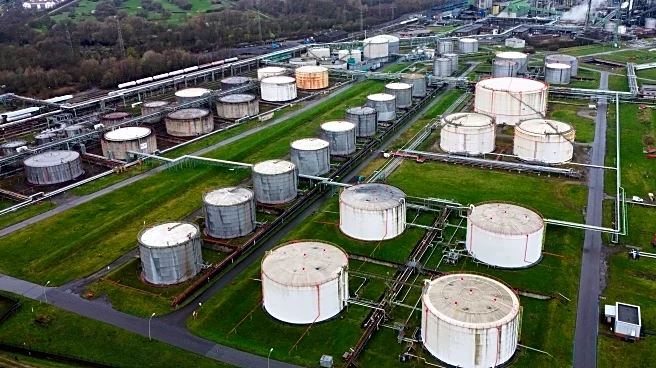
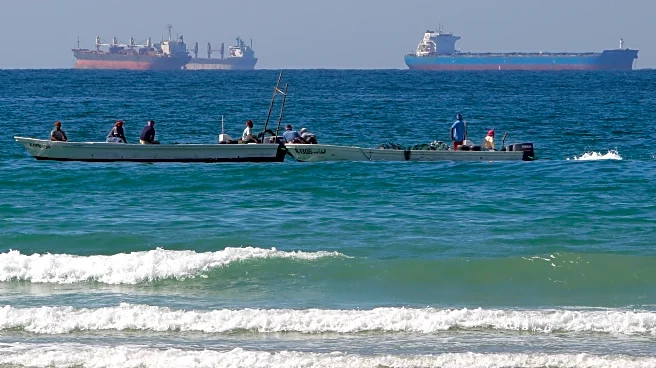
of oil tankers to navigate the Strait of Hormuz due to fears of attacks, leading to the largest oil supply disruption in history. The IEA, which consists of 32 member countries from Europe, North America, and Northeast Asia, holds approximately 1.2 billion barrels of oil in reserve. The agency recently convened an emergency meeting to discuss the potential release of 400 million barrels, which would be the largest in its history. Although a formal recommendation has not yet been announced, Japan has independently decided to release its stockpiled oil as early as next week.
Why It's Important?
The call for releasing oil reserves is crucial as it aims to stabilize global oil prices and ensure energy security amid geopolitical tensions. The Strait of Hormuz is a critical chokepoint for global oil exports, with about 20% of the world's petroleum consumption passing through it before the conflict. The disruption has led to increased oil prices, affecting economies worldwide. By releasing reserves, the IEA could alleviate some of the pressure on oil prices, benefiting both consumers and industries reliant on oil. This move also highlights the strategic importance of maintaining oil reserves for emergency situations, ensuring that member countries can respond effectively to global supply disruptions.
What's Next?
The IEA is expected to make a formal announcement regarding the release of oil reserves following its emergency meeting. Member countries will likely coordinate their actions to maximize the impact on stabilizing oil prices. Additionally, diplomatic and military efforts to secure the Strait of Hormuz are ongoing, which could influence future decisions on oil reserve releases. Stakeholders, including oil-producing nations and global markets, will closely monitor these developments, as they could have significant implications for energy policies and international relations.