


What's Happening?
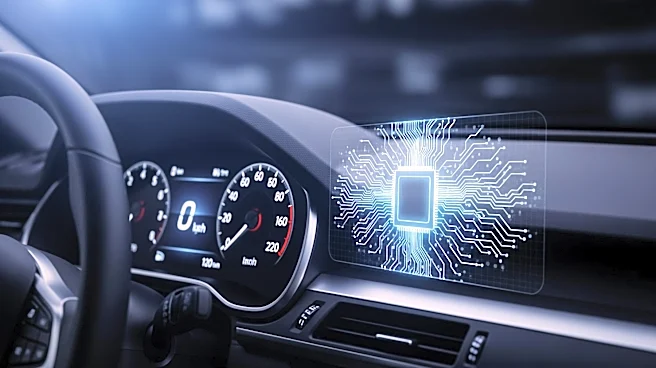
Tesla CEO Elon Musk has announced that Tesla vehicles manufactured between 2019 and 2023 will not be able to achieve unsupervised Full Self-Driving (FSD) capabilities. This limitation is due to the outdated internal computer systems, known as Hardware
3, which lack the necessary memory bandwidth compared to the newer Hardware 4. Musk explained that Hardware 3 has only one-eighth of the memory bandwidth of Hardware 4, which is crucial for unsupervised FSD. As a result, owners of these older models will need to upgrade their cars' internal systems and cameras to the newer version to achieve full autonomy. This upgrade process will require the establishment of 'small factories' in major metropolitan areas, as service centers are deemed inefficient for such large-scale upgrades. Despite these challenges, Tesla reported a first-quarter revenue of $22.38 billion, marking a 16% increase from the previous year.
Why It's Important?
The announcement highlights a significant challenge for Tesla as it strives to fulfill its promise of fully autonomous vehicles. The need for hardware upgrades in older models could impact customer satisfaction and brand loyalty, as owners may face additional costs and inconvenience. This development also underscores the rapid pace of technological advancement in the automotive industry, where hardware limitations can quickly render recent models obsolete. For Tesla, the ability to maintain its competitive edge in the autonomous vehicle market hinges on its capacity to efficiently upgrade existing vehicles and continue innovating. The company's financial performance, as indicated by its revenue growth, suggests resilience, but the long-term impact of these hardware limitations on its market position remains to be seen.
What's Next?
Tesla will need to establish the proposed 'small factories' to facilitate the necessary hardware upgrades for older models. This initiative will likely require significant investment and logistical planning. The company may also face pressure to offer these upgrades at a competitive price to maintain customer satisfaction. Additionally, Tesla's competitors in the autonomous vehicle space may capitalize on this opportunity to attract Tesla owners dissatisfied with the upgrade process. The broader industry will be watching closely to see how Tesla navigates these challenges and whether it can maintain its leadership in the autonomous vehicle market.