


What's Happening?
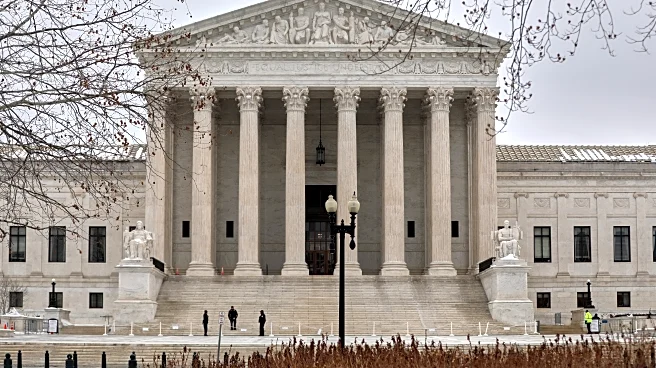
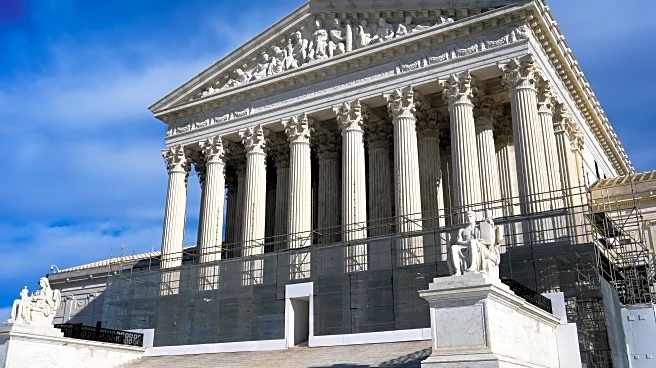
The Supreme Court has ruled that President Trump's global tariffs, imposed under the International Emergency Economic Powers Act (IEEPA), are unconstitutional. This decision strikes down tariffs that included a 10% levy on imports from most countries and 25% duties on goods from Canada and Mexico. The ruling provides relief to the book publishing and printing industries, which had been affected by these tariffs. The court's decision, written by Chief Justice John Roberts, found that Trump exceeded his authority by imposing these tariffs without explicit congressional authorization. The tariffs were projected to raise $1.5 trillion over the next decade.
Why It's Important?
The ruling is significant for the book industry, which faced increased costs and logistical
challenges due to the tariffs. The decision alleviates some of the financial pressures on publishers, printers, and booksellers, particularly those reliant on cross-border trade with Canada. The ruling also sets a precedent regarding the limits of presidential authority under the IEEPA, potentially impacting future trade policy and executive actions. The decision may lead to discussions on how to handle tariff rebates and the future of trade agreements like the United States-Mexico-Canada Agreement (USMCA).
What's Next?
The ruling opens the door for companies to seek rebates for tariffs paid, though the process may be complex. The decision also raises questions about the future of the USMCA and its provisions related to books and paper. Industry stakeholders may engage in discussions with the government to ensure a smooth transition and address any remaining trade barriers. The ruling may also influence future trade negotiations and the administration's approach to international economic policy.