





What's Happening?
The NCAA is facing significant legal challenges as efforts to eliminate caps on athlete compensation gain momentum. Bill King, a sports radio host, highlighted that some college football programs are spending up to $50 million on their rosters, far exceeding
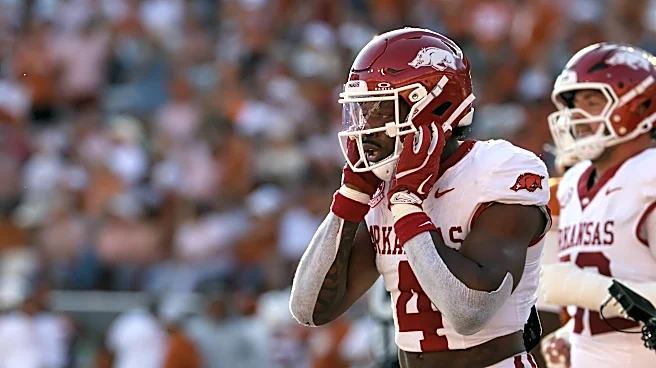
the $20.5 million revenue-sharing cap set by the House settlement. Legal actions are underway to remove this cap, potentially leading to an uncapped spending environment. This situation places pressure on programs like the Arkansas Razorbacks, which compete in the financially powerful SEC. The Razorbacks, despite their strong brand and loyal fan base, may struggle to keep up with wealthier programs if spending restrictions are lifted.
Why It's Important?
The potential removal of spending caps in college football could significantly alter the competitive landscape. Wealthier programs with larger alumni bases and more financial resources, such as Ohio State and Texas, could dominate recruitment and talent acquisition. This shift may widen the gap between top-tier programs and those with fewer resources, like Arkansas. The financial strain on less wealthy programs could lead to a reevaluation of their participation in major conferences, potentially reshaping college athletics. The ongoing legal battles highlight the NCAA's challenges in maintaining a level playing field and could set precedents for future athlete compensation policies.
What's Next?
If the legal efforts to remove spending caps succeed, college football programs will need to reassess their financial strategies. Schools like Arkansas may face increased pressure to secure funding from alumni and other sources to remain competitive. The NCAA may need to explore new regulatory frameworks to address the disparities in program funding and maintain competitive balance. Additionally, the outcome of these legal challenges could influence broader discussions on athlete compensation and the role of college sports in higher education.