



What's Happening?
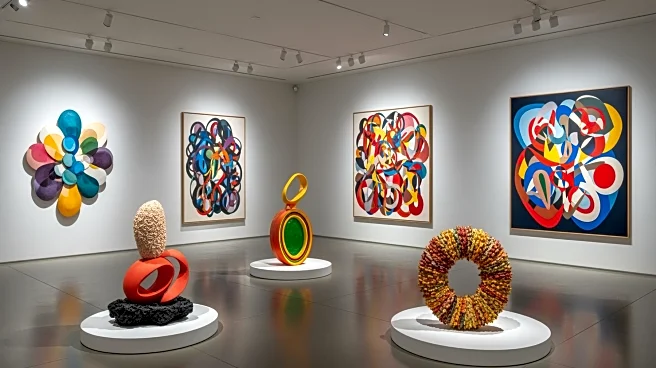
The 2026 Whitney Biennial, currently on display at the Whitney Museum of American Art in New York, is generating significant discussion for its exploration of complex themes through a diverse array of artistic voices. The exhibition features works that
delve into topics such as artificial intelligence, colonialism, and identity, with artists from various backgrounds contributing to the dialogue. Notable pieces include Zach Blas's installation on AI, Cooper Jacoby's AI-powered sculptures, and Malcolm Peacock's intricate sculpture of a red wood stump. The biennial also addresses themes of nostalgia and ecological concerns through works like Kelly Akashi's doily recreations and Jasmin Sian's lace-like compositions. The exhibition is noted for its focus on artists from regions affected by U.S. power, highlighting the global influence of American culture and politics.
Why It's Important?
The Whitney Biennial 2026 is significant as it reflects the evolving landscape of contemporary art and its engagement with pressing global issues. By featuring artists from diverse backgrounds, the biennial challenges traditional notions of American identity and art, offering a platform for underrepresented voices. This approach not only enriches the cultural dialogue but also addresses the ongoing debates around diversity, equity, and inclusion in the art world. The exhibition's focus on themes like AI and colonialism resonates with current societal concerns, prompting viewers to consider the implications of technology and historical power dynamics. The biennial's willingness to tackle controversial subjects, such as the dispossession of Palestinians, demonstrates a commitment to engaging with difficult conversations, making it a relevant and thought-provoking event in the art community.
What's Next?
As the Whitney Biennial 2026 continues through August, it is expected to spark further discussions and critiques within the art world and beyond. The exhibition's exploration of complex themes may influence future curatorial practices, encouraging other institutions to embrace diverse perspectives and address challenging topics. The biennial's impact could extend to broader cultural and political conversations, as it highlights the role of art in reflecting and shaping societal values. Additionally, the inclusion of artists from regions affected by U.S. power may prompt further examination of America's cultural influence and its implications. As the biennial progresses, it will be important to observe how audiences and critics respond to the exhibition's themes and the potential shifts in the art world's approach to diversity and representation.