






What's Happening?
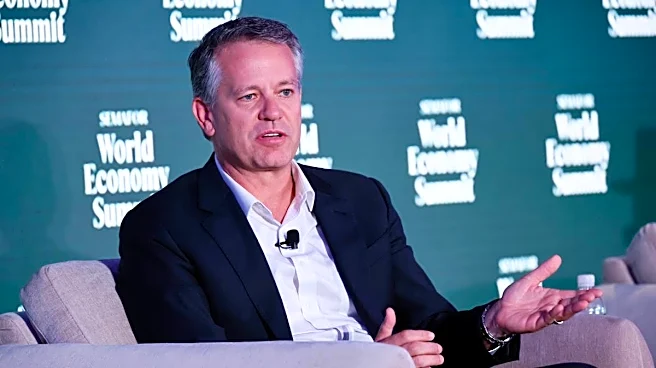
Walmart CEO Doug McMillon has addressed concerns about the impact of artificial intelligence (AI) on jobs, assuring the company's 2.1 million employees that AI will enhance their roles rather than replace them. During Walmart's annual Associates Week
in Arkansas, McMillon emphasized that AI is being integrated across various functions such as product design, logistics, store operations, and customer service. The company has also announced that any U.S. employee can become certified in its AI tools. Despite recent layoffs in technology and product design teams, Walmart has not attributed these cuts to AI. The company is focusing on capability-building and workforce transformation, with AI expected to improve efficiency and predict demand spikes.
Why It's Important?
The integration of AI in Walmart's operations is significant as it reflects a broader industry trend where large-scale AI adoption aims to reassure employees about job security while enhancing operational efficiency. As the largest private sector employer in the U.S., Walmart's approach to AI could influence other companies' strategies in balancing technological advancement with workforce stability. The move is also crucial for maintaining investor confidence, as Walmart recently became the first bricks-and-mortar business to exceed $1 trillion in market value. However, labor groups have expressed concerns about the rapid rollout of AI and its potential impact on job pressure and security.
What's Next?
Walmart plans to continue its AI investment, with a focus on predictive models to better anticipate demand and improve logistics. The company aims to remain a major employer while adapting to technological advancements. Stakeholders, including labor groups, may continue to push for transparency regarding AI's impact on workers. Walmart's future strategies will likely involve balancing technological innovation with employee welfare to maintain its market position and workforce morale.