





What's Happening?
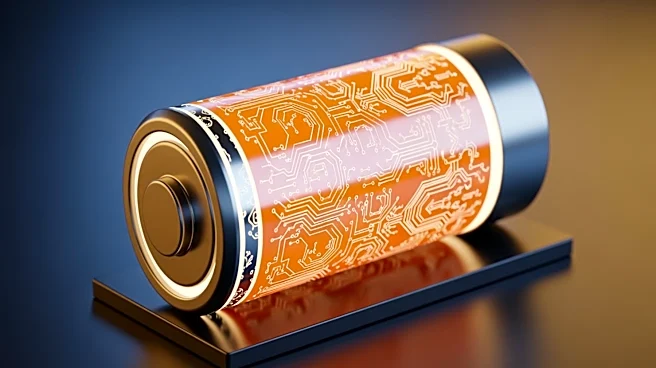
General Motors (GM) has announced plans to develop sodium-ion battery cells in partnership with Peak Energy. These batteries are intended for use in stationary energy storage systems rather than electric vehicles. The initiative aims to create large-scale
energy storage solutions, which are increasingly in demand due to the growth of data centers and renewable energy sources like wind and solar power. GM's sodium-ion batteries are expected to offer lower lifetime costs compared to current lithium-iron-phosphate batteries, making them an attractive option for long-term energy storage. The company is leveraging its Battery Cell Development Center in Michigan to optimize production processes and scale up the new battery technology.
Why It's Important?
The development of sodium-ion batteries by GM represents a significant shift in the energy storage market, particularly in the U.S. By focusing on sodium-ion technology, GM aims to reduce dependency on lithium-ion batteries, which are largely controlled by Chinese companies. This move could enhance energy security and reduce costs for utilities and data centers. The new battery technology is expected to be more cost-effective and robust, offering better performance in low temperatures and reducing the need for complex cooling systems. This could lead to broader adoption of renewable energy solutions and support the growing demand for energy storage in various sectors.
What's Next?
GM plans to continue refining its sodium-ion battery technology and expand its production capabilities. The company is expected to collaborate with partners like Ultium Cells to bring these batteries to market. As the technology matures, it could lead to further innovations in energy storage solutions, potentially influencing the design and deployment of future energy infrastructure. Stakeholders in the energy and technology sectors will likely monitor GM's progress closely, as successful implementation could set new standards for energy storage systems.