






What's Happening?
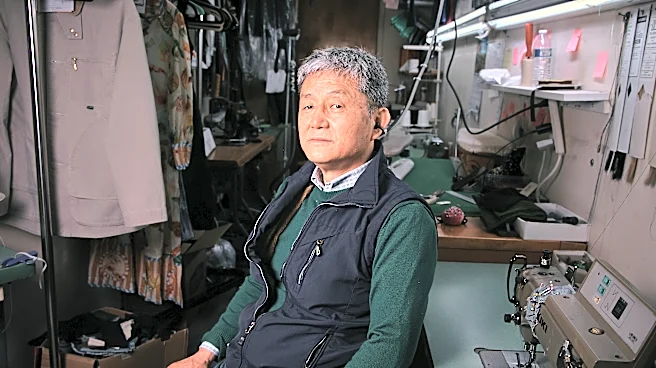
The U.S. is experiencing a decline in the number of professional tailors, dressmakers, and custom sewers, despite a growing demand for their services. Kil Bae, a tailor in Manhattan, exemplifies this trend as he continues to work in a shrinking industry.
The demand for custom alterations is driven by consumers seeking personalized fits for off-the-rack clothing and adjustments due to weight-loss drugs. However, the profession struggles to attract new workers, with the median age of sewers being 54, significantly older than the general workforce. The mean annual wage for these professionals is $44,050, which is lower than the average for all workers. Efforts are being made to train new tailors, such as Nordstrom's partnership with the Fashion Institute of Technology to offer advanced sewing programs.
Why It's Important?
The decline in skilled tailors and dressmakers poses a challenge to the fashion industry, which relies on these professionals for custom alterations and garment creation. As the demand for personalized clothing increases, the shortage of skilled workers could lead to longer wait times and higher costs for consumers. The industry is attempting to address this by training new tailors, but the low wages and physical demands of the job may deter young people from entering the field. This situation highlights the need for sustainable solutions to preserve the craftsmanship and meet consumer demands.
What's Next?
The fashion industry is likely to continue investing in training programs to cultivate a new generation of tailors. Retailers like Nordstrom are expanding their tailoring services to meet consumer demand, and other companies may follow suit. The industry may also explore technological solutions to assist tailors in their work, although AI cannot fully replicate the skill of tailoring. The success of these initiatives will depend on attracting young talent and offering competitive wages.