






What's Happening?
Rivian, Proterra, and Hyundai are making significant strides in expanding their electric vehicle (EV) and hydrogen production capabilities in North America. Rivian plans to increase the production capacity of its Georgia plant to 300,000 vehicles annually,
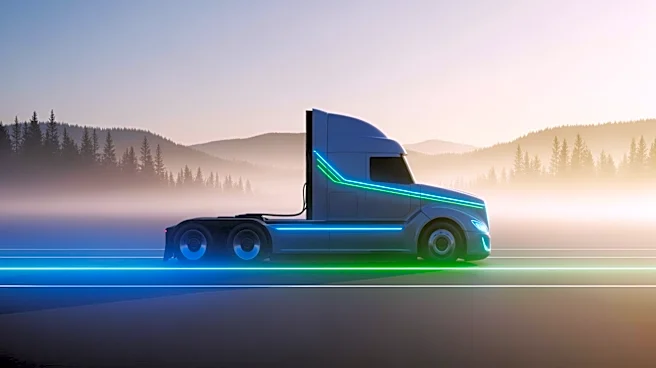
enhancing its manufacturing footprint with support from the U.S. Department of Energy. Proterra is adding a U.S. battery cell option to its Onyx battery platform to strengthen domestic supply chain resilience for heavy-duty transportation. Meanwhile, Hyundai is expanding the availability of its Xcient fuel cell trucks in Canada, marking a milestone in the adoption of hydrogen mobility in the region.
Why It's Important?
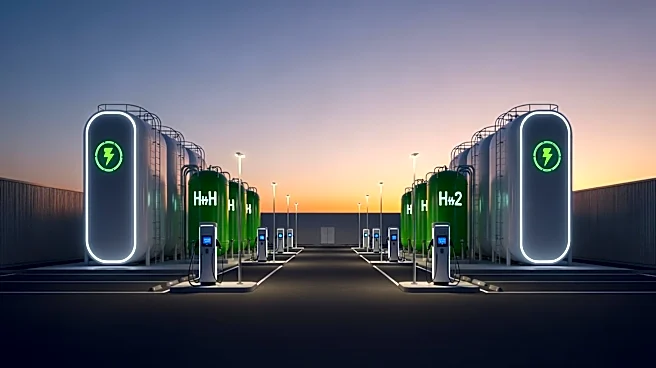
These expansions are crucial for advancing the adoption of clean transportation technologies in North America. Rivian's increased production capacity will help meet the growing demand for electric vehicles, supporting the U.S. automotive industry's shift towards sustainability. Proterra's focus on localizing battery production addresses supply chain vulnerabilities and aligns with the increasing demand for domestic content. Hyundai's efforts to expand hydrogen truck availability in Canada highlight the potential for hydrogen as a viable alternative to traditional fuels, contributing to the decarbonization of the transportation sector.
What's Next?
Rivian's plant expansion is set to begin construction in 2026, with vehicle production targeted for late 2028. Proterra plans to start shipments of its U.S. battery cells in early 2027, while Hyundai continues to collaborate with Canadian dealers to support the deployment of hydrogen trucks. These developments may prompt further investments in clean transportation infrastructure and technology, encouraging other manufacturers to enhance their production capabilities and explore alternative energy solutions.