



What's Happening?
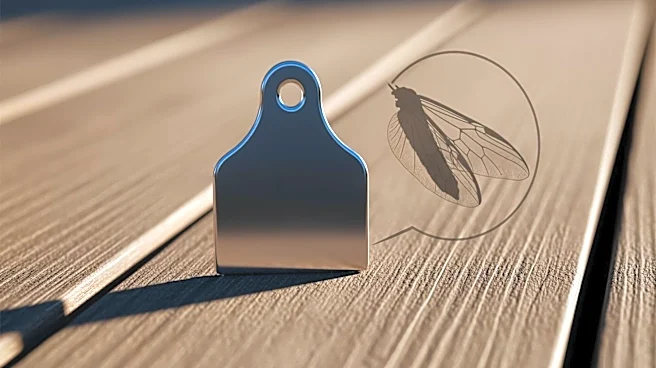
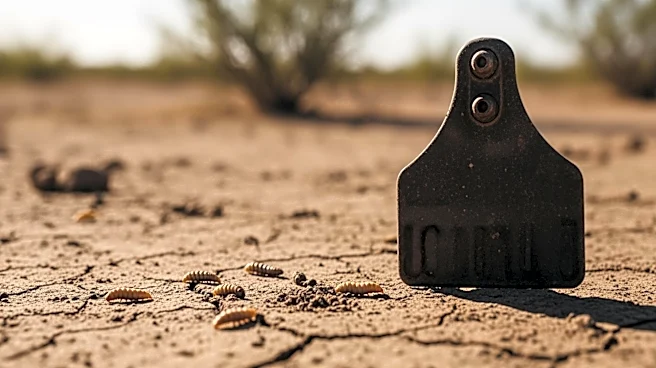
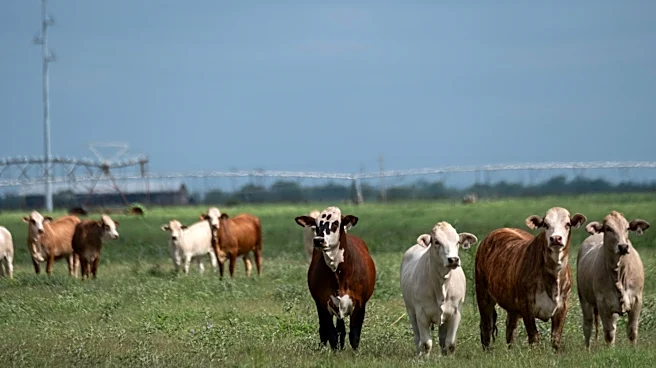
The New World screwworm, a parasitic fly larva, has re-emerged in the U.S., threatening the already strained beef industry. The USDA has confirmed cases in Texas and New Mexico, with the parasite affecting cattle and other livestock. The screwworm was
previously eradicated in the U.S. but has returned, possibly due to illegal cattle trafficking. The USDA is using sterile fly releases to control the population, a method that has been effective in the past. The resurgence comes as the U.S. cattle herd is at its smallest since 1951, exacerbating supply issues and driving up beef prices.
Why It's Important?
The return of the screwworm could have significant economic implications for the U.S. beef industry, which is already dealing with high prices and supply shortages. The parasite's impact on livestock could lead to further price increases and affect consumer access to beef. The situation underscores the importance of biosecurity and pest management in maintaining agricultural stability. The USDA's response will be critical in preventing a widespread outbreak and ensuring the industry's resilience.
What's Next?
The USDA is ramping up efforts to produce and release sterile flies to combat the screwworm. The agency is also working to increase production capacity for sterile flies, with plans to build a new facility in Texas. The situation may prompt policy discussions on livestock import regulations and biosecurity measures. The beef industry will need to adapt to these challenges, potentially affecting market dynamics and consumer prices.