





What's Happening?
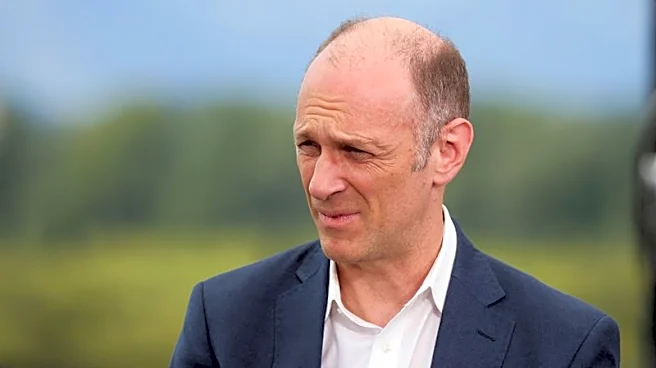
Ruchir Sharma, a prominent investor and Chairman of Rockefeller Capital, has expressed skepticism about the Federal Reserve's ability to cut interest rates to support the U.S. economy amidst rising oil prices. Despite the economic risks posed by the oil shock,
Sharma argues that the Fed's capacity to ease monetary policy is limited due to persistent inflation, which has exceeded the Fed's 2% target for 60 consecutive months. Inflation reached 3.3% annually in March, driven largely by a 10.9% increase in energy costs. This situation marks a departure from previous years when the Fed aggressively cut rates to stimulate growth during the pandemic. Investors are now less optimistic about potential rate cuts, with market expectations for further reductions significantly diminished.
Why It's Important?
The Federal Reserve's current stance on interest rates has significant implications for the U.S. economy. With inflation consistently above target, the Fed's reluctance to cut rates could limit economic growth, especially in the face of external shocks like rising oil prices. This approach contrasts with past strategies where the Fed acted swiftly to support the economy during downturns. The lack of fiscal support, coupled with rising bond yields, suggests that the government may also be constrained in its ability to provide economic stimulus. This situation could lead to slower economic recovery and increased financial market volatility, affecting businesses and consumers alike.
What's Next?
As the Federal Reserve maintains its cautious approach, stakeholders will closely monitor inflation trends and economic indicators to gauge future policy directions. The potential for further oil price increases and geopolitical tensions could exacerbate economic challenges, prompting calls for alternative measures to support growth. Market participants will also watch for any shifts in fiscal policy that could provide relief. The Fed's upcoming meetings and statements will be critical in shaping expectations and guiding economic strategies.