




What's Happening?
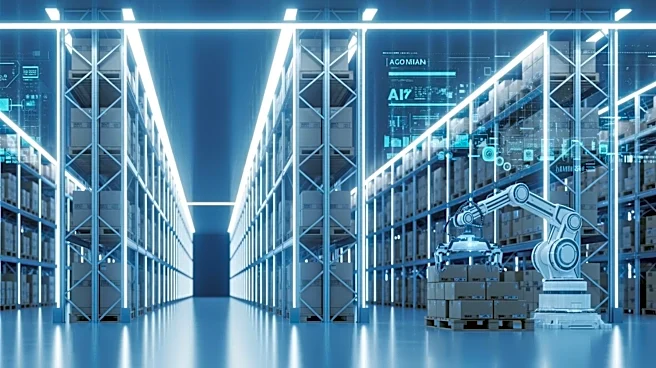
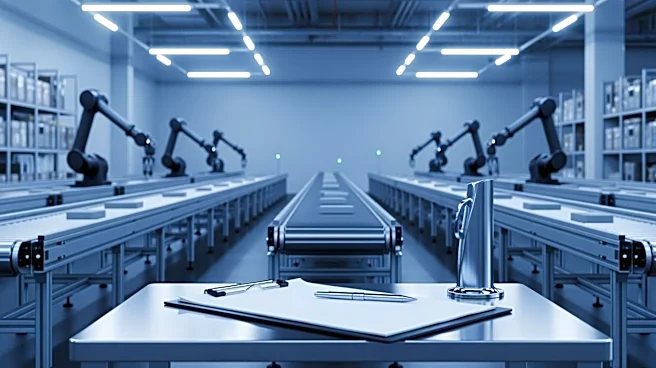
Walmart is advancing its supply chain operations by integrating AI-powered technology in its distribution centers. These centers utilize store-level data to direct robots in arranging pallets, significantly reducing the time required for store employees
to unload trucks. According to Walmart US CEO David Guggina, this technology allows for the unloading of trailers in minutes, a task that previously took hours. The system also prioritizes pallets with urgent supplies, loading them last so they can be unloaded first. Walmart plans to establish 16 of these next-generation distribution centers by the end of the year, aiming to improve supply chain efficiency, store operations, and cost management.
Why It's Important?
The implementation of AI in Walmart's distribution centers represents a significant shift in retail logistics, potentially setting a new standard for efficiency in the industry. By reducing unloading times, Walmart can streamline its supply chain, ensuring faster restocking and better inventory management. This efficiency not only enhances customer satisfaction through improved product availability but also allows Walmart to reduce operational costs. The savings from these efficiencies can be reinvested into maintaining competitive pricing, which is crucial in the highly competitive retail market. This move could influence other retailers to adopt similar technologies, further transforming the logistics landscape.
What's Next?
Walmart's expansion of AI-powered distribution centers is expected to continue, with 16 centers planned by year-end. This expansion will likely prompt responses from competitors, who may seek to implement similar technologies to maintain competitive parity. Additionally, the increased use of automation may lead to discussions about the impact on employment within the retail sector, as tasks traditionally performed by humans are increasingly automated. Stakeholders, including labor groups and policymakers, may engage in dialogue about the future of work in retail and the need for workforce retraining programs.