




What's Happening?
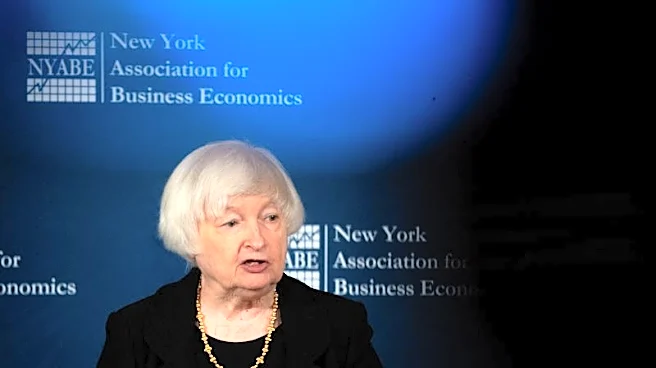
Federal Reserve Governor Christopher Waller addressed the economic challenges posed by the ongoing conflict in Iran and its impact on inflation and the labor market. In a speech, Waller noted that the war has led to a spike in energy prices, contributing
to inflationary pressures. He expressed concerns about the labor market, which is experiencing low job growth despite appearing stable. Waller emphasized the complexity of balancing the Federal Reserve's dual mandate of managing inflation and supporting employment. He indicated that the Fed might maintain its current interest rate policy until the economic outlook becomes clearer, as the risks of inflation may outweigh those related to the labor market.
Why It's Important?
The ongoing conflict in Iran and its impact on global energy prices have significant implications for the U.S. economy. Rising inflation can erode purchasing power and affect consumer confidence, while a weak labor market can hinder economic recovery. The Federal Reserve's response to these challenges is crucial, as it influences monetary policy, interest rates, and overall economic stability. Businesses and consumers alike are affected by these economic conditions, which can lead to changes in spending, investment, and employment decisions. The Fed's cautious approach reflects the uncertainty and potential long-term effects of the conflict on the U.S. economy.
What's Next?
The Federal Reserve is expected to closely monitor the situation in Iran and its economic repercussions. The upcoming Federal Open Market Committee meeting will likely focus on assessing the impact of the conflict on inflation and the labor market. Depending on the developments, the Fed may adjust its monetary policy to address these challenges. Stakeholders, including businesses and policymakers, will be watching for any signals from the Fed regarding future interest rate decisions. The resolution of the conflict and stabilization of energy prices could influence the Fed's policy direction and economic forecasts.