







What's Happening?
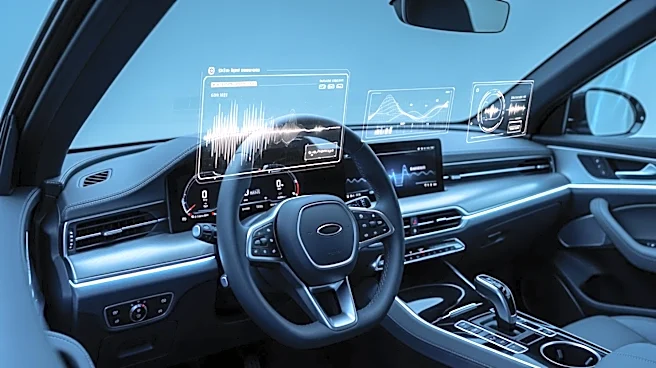
rFpro has launched a new simulation package called AV elevate In Cabin, designed to enhance the testing and development of in-cabin driver and occupant monitoring systems for autonomous vehicles. This development comes in response to the Euro NCAP's 2026
protocols, which significantly increase the safety weighting of driver monitoring systems. The package integrates advanced technologies such as infrared camera and radar sensor modeling, along with a pre-configured Euro NCAP in-cabin scenario library. These tools are intended to improve the accuracy of driver and occupant monitoring assessments before physical prototypes are available. The simulation platform is unique in its ability to cover both external and internal sensor development, making it a comprehensive tool for the automotive industry.
Why It's Important?
The introduction of rFpro's in-cabin simulation package is a significant advancement in the field of autonomous vehicle safety. As the Euro NCAP's updated protocols increase the importance of driver monitoring systems, this tool provides a critical resource for automotive manufacturers to meet these new standards. By enabling detailed simulations of driver and occupant behavior, the package helps optimize safety features such as airbag deployment and noise-cancelling audio systems. This development is crucial for the automotive industry as it moves towards more autonomous vehicle operations, ensuring that safety and passenger experience are prioritized. The ability to simulate these systems before physical testing can lead to faster development cycles and potentially safer vehicles on the road.
What's Next?
As rFpro continues to develop its in-cabin simulation capabilities, the company is looking to partner with sensor developers and original equipment manufacturers (OEMs) to further enhance this technology. The focus will be on refining the accuracy of occupant monitoring systems and expanding the range of scenarios that can be simulated. This collaboration could lead to more sophisticated safety features in future autonomous vehicles. Additionally, as the EU mandates advanced driver distraction warning systems from July 2026, the demand for such simulation tools is expected to grow, potentially influencing regulatory standards and industry practices.