



What's Happening?
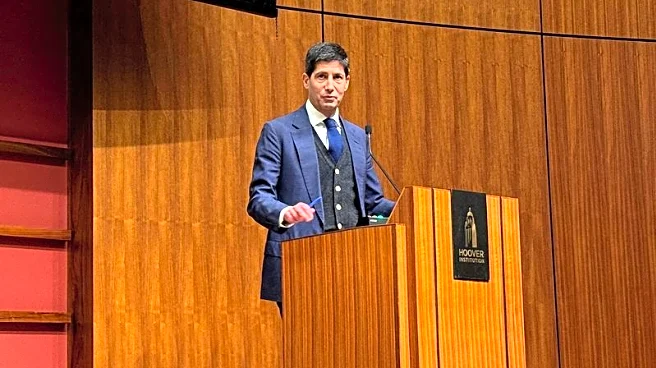
President Donald Trump, along with his Treasury Secretary and his nominee for the Federal Reserve chair, Kevin Warsh, are optimistic about replicating the economic boom of the 1990s through artificial intelligence and changes in monetary policy. Trump believes
that Warsh can drive economic growth by reducing interest rates, similar to the approach taken by former Fed chair Alan Greenspan during the 1990s. However, many economists are doubtful, pointing out that the current economic environment is vastly different from the 1990s. They argue that the administration's narrative oversimplifies the factors that contributed to the previous economic surge, such as productivity gains from the internet and globalization.
Why It's Important?
The potential appointment of Kevin Warsh as Fed chair could significantly impact U.S. monetary policy, particularly in terms of interest rates. If Warsh aligns with Trump's vision, it could lead to lower interest rates, which might stimulate economic growth but also risk inflation. The reliance on AI to drive productivity and economic expansion is a contentious point among economists, with some suggesting that the benefits of AI are not yet fully realized. The outcome of this policy direction could affect various sectors, including technology, finance, and labor markets, influencing employment rates and wage growth.
What's Next?
If confirmed, Warsh's approach to interest rates and AI-driven productivity will be closely monitored by economists and policymakers. The Federal Reserve's decisions could lead to debates on the balance between stimulating growth and controlling inflation. Stakeholders, including businesses and financial institutions, will likely react to changes in interest rates, adjusting their investment strategies accordingly. The broader implications for international trade and economic policy could also emerge, given the current global economic climate.
Beyond the Headlines
The focus on AI as a driver of economic growth raises questions about the long-term impact on the workforce and the nature of jobs. As AI technology advances, there may be shifts in employment patterns, requiring new skills and potentially leading to job displacement. Additionally, the emphasis on monetary policy as a tool for economic growth highlights the ongoing debate about the role of the Federal Reserve in managing the economy, especially in the context of rising national debt and changing global trade dynamics.