


What's Happening?
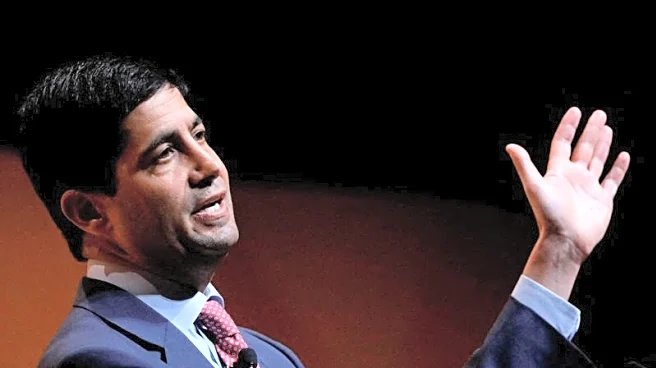
Kevin Warsh, nominated by President Trump to succeed Jerome H. Powell as the Chair of the Federal Reserve, is advocating for lower interest rates based on the belief that the U.S. is entering a significant productivity boom driven by artificial intelligence (AI). Warsh, who previously held a more conservative stance on monetary policy, now aligns with the Trump administration's view that AI could lead to a productivity surge similar to the 1990s dot-com era. This perspective suggests that the Federal Reserve could maintain or even lower interest rates without triggering inflation, as increased productivity typically allows for economic growth without price hikes. However, this view is not universally accepted among economists or current Fed officials,
some of whom remain cautious about inflation and skeptical about the long-term impact of AI on productivity.
Why It's Important?
The nomination of Warsh and his stance on interest rates could significantly influence U.S. monetary policy. If confirmed, Warsh would lead a divided Federal Reserve committee, where consensus-building is crucial for policy decisions. His approach could lead to lower borrowing costs, potentially stimulating economic growth. However, this could also risk inflation if the anticipated productivity gains from AI do not materialize as expected. The debate highlights a broader economic question about the role of emerging technologies in shaping future economic landscapes and the appropriate monetary policy response. Stakeholders, including businesses and consumers, could benefit from lower rates through cheaper loans and increased investment opportunities, but they also face the risk of inflationary pressures.
What's Next?
If Warsh is confirmed by the Senate, he will need to navigate a complex landscape of differing opinions within the Federal Reserve. He will have to convince other members of the rate-setting committee of the merits of his approach, particularly those concerned about inflation. The outcome of this internal debate will shape the Fed's monetary policy in the coming years. Additionally, the broader economic community will closely watch how AI-driven productivity impacts the economy, influencing future policy decisions. The confirmation process itself will be a critical next step, as it will determine whether Warsh's views will guide the Fed's approach to interest rates.
Beyond the Headlines
The discussion around AI and productivity touches on deeper issues regarding technological advancement and its economic implications. While AI holds the promise of significant productivity improvements, it also raises questions about labor market dynamics, income distribution, and the potential for technological unemployment. Policymakers will need to consider these factors when crafting economic strategies. Furthermore, the comparison to the 1990s productivity boom underscores the importance of historical context in economic decision-making, highlighting both the potential and the limitations of drawing parallels between different technological eras.