






What's Happening?
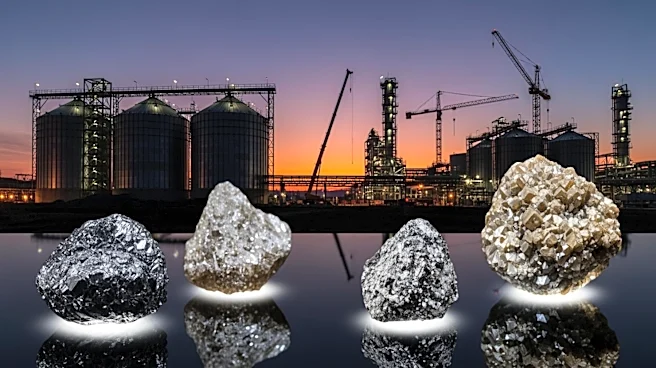
USA Rare Earth has announced a significant investment of $1.2 billion to establish a rare earth magnet manufacturing and refined metals facility in Cherokee County, South Carolina. This initiative is part of the company's strategy to create a fully domestic
'mine-to-magnet' supply chain, aiming to reduce the United States' heavy reliance on China for critical materials. The new plant in Blacksburg will focus on producing sintered neodymium-iron-boron (NdFeB) permanent magnets and strip-cast metal and alloy, with an annual production capacity of 6,400 tonnes and 5,000 tonnes respectively. The project is expected to create approximately 490 high-skill jobs and is set to be fully operational by 2028. This development is a key component of USA Rare Earth's vertically integrated strategy, which includes the Round Top heavy rare earth project in Texas and international assets in Brazil, the UK, and France.
Why It's Important?
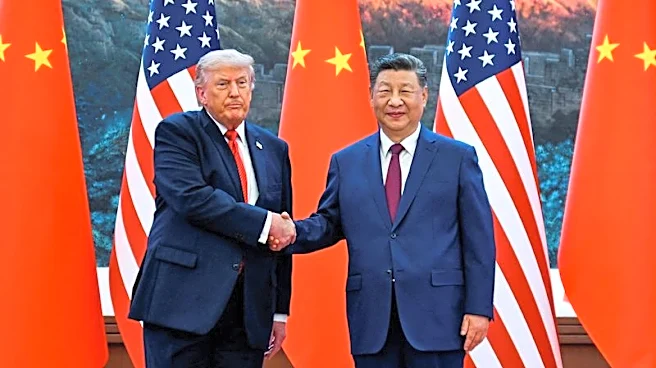
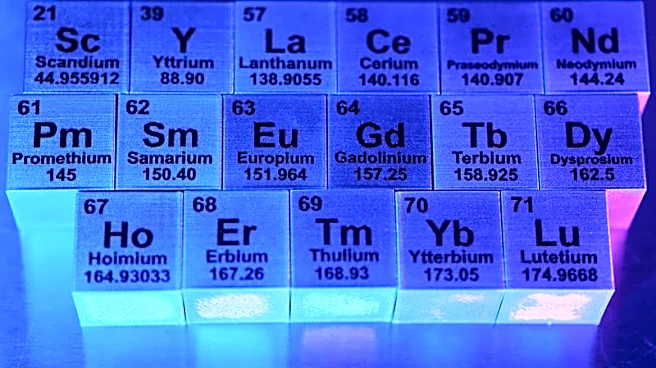
The establishment of this facility is crucial for the U.S. as it seeks to mitigate national security and economic risks associated with its current dependency on China for rare earth materials. China currently dominates the global production of sintered NdFeB magnets, which are essential for high-performance motors and generators used in electric vehicles, wind turbines, and defense systems. By increasing domestic production capacity, USA Rare Earth aims to supply 25-40% of the U.S. market needs in strategic sectors, thereby reducing vulnerability to Chinese export restrictions and price volatility. This move is also aligned with broader federal efforts to bolster the U.S. critical minerals sector, supported by substantial government incentives.
What's Next?
Site preparation for the new facility is expected to begin soon, with full commissioning targeted for 2028. As the project progresses, it will be crucial to monitor the impact on the U.S. rare earth supply chain and the extent to which it can reduce dependency on Chinese imports. The success of this initiative could encourage further investments in domestic rare earth production, potentially leading to a more resilient and self-sufficient supply chain. Additionally, the project may face challenges such as acquisition scrutiny, technology disputes, and permitting hurdles, which will need to be navigated carefully.
Beyond the Headlines
This investment not only represents a strategic move to enhance U.S. manufacturing resilience but also highlights the growing importance of rare earth elements in the global economy. As demand for electric vehicles and renewable energy technologies continues to rise, securing a stable supply of these critical materials will be essential for maintaining competitive advantage and supporting the clean energy transition. The project also underscores the potential for economic growth and job creation in regions like South Carolina, which could benefit from increased industrial activity and investment.