







What's Happening?
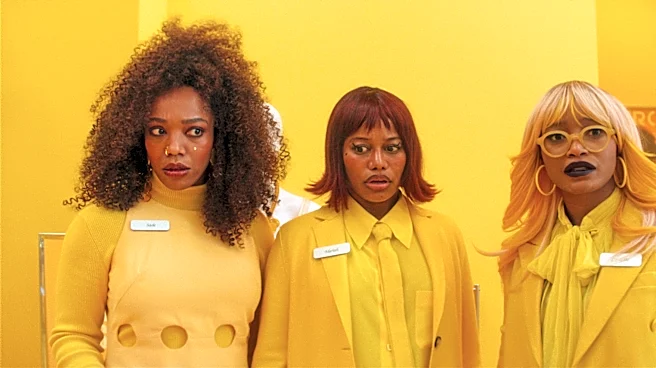
The film 'I Love Boosters,' directed by Boots Riley, features a vibrant and eclectic wardrobe designed by Oscar-nominated costume designer Shirley Kurata. The movie, starring Keke Palmer, Naomi Ackie, and Demi Moore, follows a group of girlfriends who
engage in stealing and reselling clothes to make ends meet. Kurata's designs are a colorful mix of Bay-area-grunge and Gen-Z-raver styles, utilizing thrift store finds and student designer loans. The film critiques the fashion industry's ethical shortcomings, such as over-consumption and the exploitation of garment workers. Kurata's work on the film allowed her to explore creative fashion ideas she had long wanted to pursue.
Why It's Important?
The film 'I Love Boosters' serves as a cultural critique of the fashion industry, highlighting issues such as the unethical treatment of garment workers and the environmental impact of over-consumption. By showcasing these themes through a comedic narrative, the film brings attention to the responsibilities of both consumers and designers in addressing these issues. The vibrant costumes designed by Shirley Kurata not only enhance the film's narrative but also emphasize the importance of ethical fashion practices. This film could influence public perception and encourage more sustainable and ethical practices within the fashion industry.
What's Next?
As 'I Love Boosters' gains attention, it may spark discussions within the fashion industry about ethical practices and sustainability. The film's critique of over-consumption and exploitation could lead to increased awareness and potentially inspire changes in consumer behavior and industry standards. Fashion designers and brands might feel pressured to adopt more ethical practices, while consumers could become more conscious of their purchasing decisions. The film's impact could extend beyond entertainment, influencing real-world changes in how fashion is produced and consumed.
Beyond the Headlines
The film's exploration of fashion industry issues also touches on broader societal themes, such as economic inequality and workers' rights. By portraying the struggles of underpaid retail employees and the exploitation of smaller designers, 'I Love Boosters' highlights the widening gap between the wealthy and the working class. This narrative could resonate with audiences and contribute to ongoing conversations about economic justice and labor rights. The film's success might encourage other filmmakers to tackle similar themes, further amplifying these important social issues.