







What's Happening?
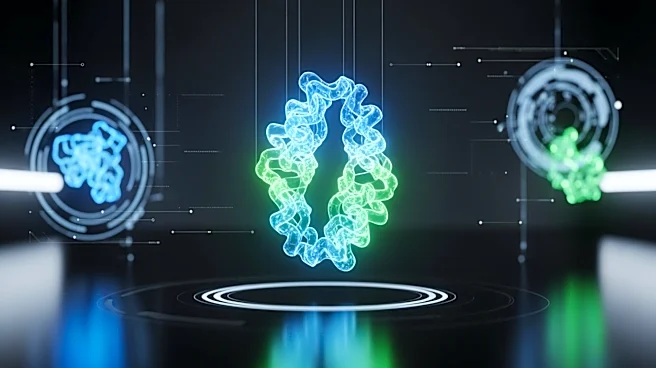
Researchers led by Professor Kirill Alexandrov from the QUT School of Biology and Environmental Science have successfully developed AI-generated proteins that function as smart molecular sensors. These proteins, designed using artificial intelligence,
can detect specific molecules and trigger a response, making them suitable for various applications in medicine, environmental monitoring, and biotechnology. The study, published in Nature Biotechnology, demonstrates that these protein switches can operate within living bacterial cells and can be linked to electrodes to produce electrical signals, similar to glucose meters. This innovation challenges the traditional belief that sensing proteins require large structural changes to function, showing instead that subtle changes in protein movement can activate these sensors.
Why It's Important?
The development of AI-generated proteins as molecular sensors represents a significant advancement in synthetic biology. This technology could lead to the creation of low-cost biosensors for a wide range of applications, including portable diagnostic devices and environmental sensing systems. By expanding the capabilities of protein engineering, this research opens new possibilities for designing biosensors that can respond intelligently to chemical signals. The ability to create custom-designed proteins on demand could revolutionize how industries approach environmental monitoring and medical diagnostics, potentially leading to more efficient and cost-effective solutions.
What's Next?
The next steps for this research involve further testing and refinement of the AI-generated protein sensors to enhance their functionality and reliability in real-world applications. Researchers may focus on expanding the range of detectable molecules and improving the integration of these sensors into existing technologies. Collaboration with industry partners could accelerate the development of commercial products based on this technology, potentially leading to new diagnostic tools and environmental monitoring systems. Additionally, further exploration of the underlying mechanisms of protein movement could provide deeper insights into natural protein regulation.