
What's Happening?
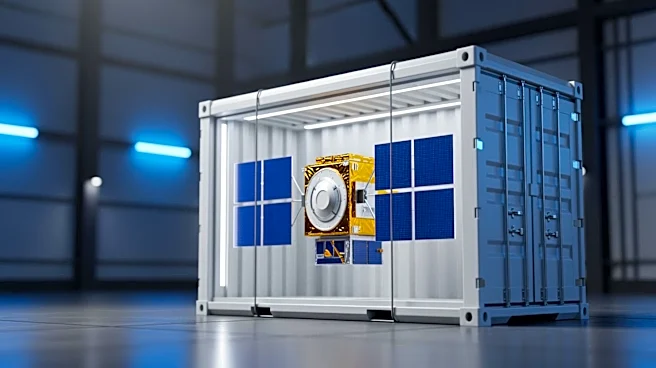
Planet Labs PBC has announced the shipment of three Pelican satellites to Vandenberg Space Force Base in California, preparing for their launch aboard the upcoming CAS500/2 rideshare mission with SpaceX.
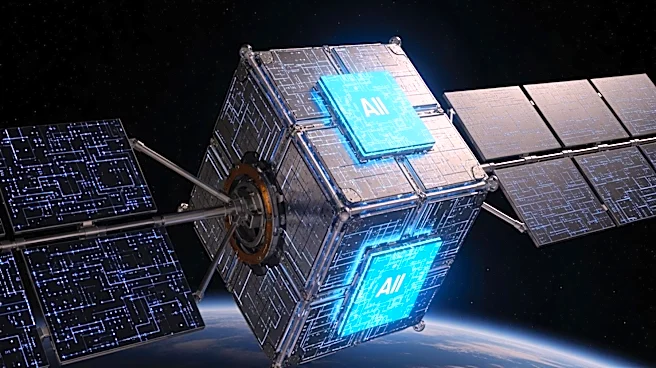
These satellites are part of Planet's efforts to expand its Pelican fleet, which offers high-resolution, AI-enabled solutions. The integration of NVIDIA's Jetson platform onboard these satellites aims to provide near real-time answers about the planet, enhancing Planetary Intelligence. The satellites are designed to capture 50 cm class resolution imagery across six multispectral bands, optimized for cross-sensor analysis. Planet plans to launch additional Pelican satellites over the next year, including second-generation models with improved resolution capabilities.
Why It's Important?
The launch of these Pelican satellites represents a significant advancement in satellite technology, particularly in the realm of AI-enabled Earth observation. By providing high-resolution imagery and rapid revisit rates, Planet Labs is positioned to offer critical data and insights to various industries, including agriculture, forestry, intelligence, and finance. The integration of AI at the edge allows for faster data processing and decision-making, which is crucial for time-sensitive operations. This development underscores the growing importance of satellite technology in addressing global challenges and supporting decision-making processes across sectors.
What's Next?
Planet Labs plans to continue expanding its satellite fleet, with the launch of second-generation Pelican satellites later in 2026. These new satellites will offer even higher resolution imagery, pushing the boundaries of intra-day revisit rates and low latency tasking. As Planet Labs enhances its capabilities, it is likely to attract more customers seeking advanced geospatial solutions. The ongoing development and deployment of these satellites will further solidify Planet Labs' position as a leader in the Earth observation industry.