






What's Happening?
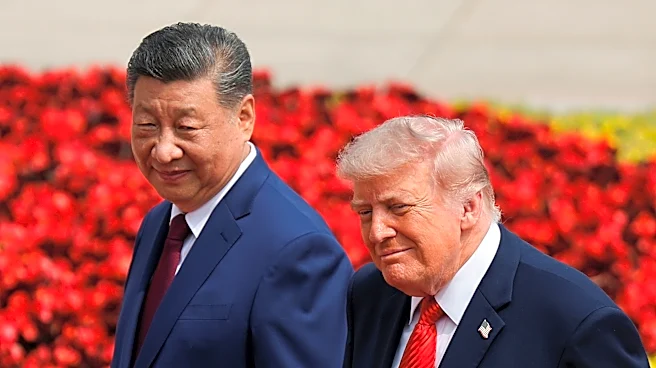
Nvidia's stock experienced a 4% drop following reports from the Trump-Xi summit indicating that despite U.S. approval for the sale of Nvidia's H200 AI chips to Chinese companies, no actual sales have occurred. President Trump stated that Chinese companies opted
not to purchase the chips, aiming instead to develop domestic alternatives. Additionally, Chinese authorities have not authorized these purchases, which may be a strategic move to bolster local chip development. This development has led to a decrease in Nvidia's stock value, reflecting market concerns over the company's ability to penetrate the Chinese market.
Why It's Important?
The situation highlights the ongoing geopolitical tensions affecting the tech industry, particularly in the AI chip sector. Nvidia's inability to secure sales in China could impact its market share and revenue, given China's significant demand for AI technology. This development underscores the strategic importance of domestic technology development in China and the potential challenges U.S. companies face in accessing foreign markets. The outcome of this situation could influence future trade negotiations and the global tech landscape, affecting stakeholders across the industry.
What's Next?
The future of Nvidia's sales in China remains uncertain. If Chinese authorities grant authorization, sales could resume, benefiting Nvidia. However, if China continues to prioritize domestic development, Nvidia may need to explore alternative markets or strategies. The situation may prompt further diplomatic discussions between the U.S. and China, potentially influencing broader trade policies. Stakeholders will be closely monitoring any changes in China's stance or U.S. trade policies that could impact Nvidia's operations.