




What's Happening?
Voltify, an Israeli startup, has successfully raised $30 million in seed funding to advance its diesel-to-electric train conversion technology. The funding round was led by Aleph and mining company Fortescue, with participation from the Menomadin fund,
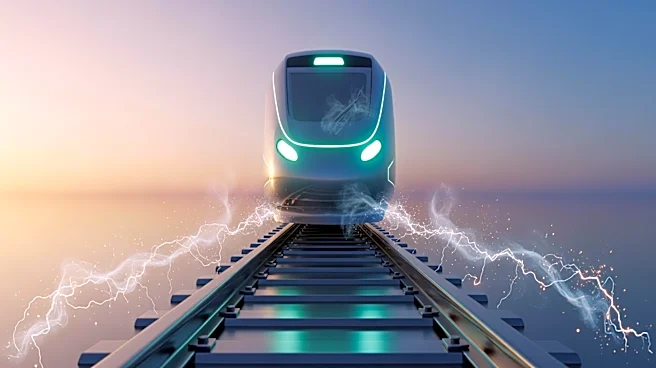
Jimpact, The Dock funds, and other private investors. Voltify's innovative approach involves using battery-powered locomotives and a dynamic on-the-go charging system, which eliminates the need for traditional electrification infrastructure like overhead contact lines. The company also plans to utilize local energy microgrids that generate and store renewable energy, reducing reliance on central power grids. This technology aims to significantly cut rail operator energy costs, which are substantial in the United States, where the six largest rail operators spend approximately $11 billion annually on diesel.
Why It's Important?
The initiative by Voltify is significant as it addresses two major challenges in the rail industry: high energy costs and carbon emissions. By transitioning from diesel to electric trains, Voltify's technology could potentially reduce over 50 million tons of carbon emissions annually, a substantial contribution to environmental sustainability. This shift not only promises a cleaner energy source but also offers economic benefits by potentially reducing energy costs by over 20%. Such a reduction could transform the economics of rail operations, making them more sustainable and cost-effective. The adoption of this technology could set a precedent for other industries to follow suit in reducing their carbon footprint.
What's Next?
Voltify has already signed a paid pilot agreement with one of the world's largest rail operators, with implementation expected to begin soon. Following the pilot, a full-scale system is anticipated to be operational next year. Additionally, regional operators in the United States have shown interest, with orders already placed. This growing portfolio indicates a strong market demand for Voltify's technology. As the company progresses, it will likely focus on expanding its reach and refining its technology to further enhance efficiency and sustainability in rail transport.