
What's Happening?
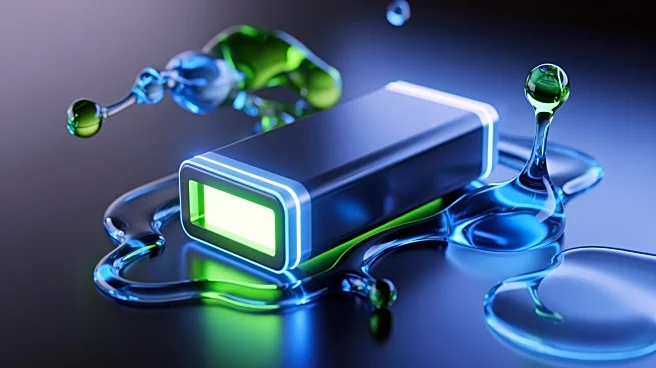
Chinese scientists have developed a new hydrofluorocarbon-based electrolyte that could significantly enhance the performance of lithium batteries. This innovative electrolyte works efficiently at room temperature and in extreme conditions, such as -70
degrees Celsius. The research, conducted by teams in Shanghai and Tianjin, indicates that batteries using this electrolyte have more than twice the energy density of conventional ones. This advancement could lead to longer-lasting batteries suitable for various climates and even space missions. The findings, published in the journal Nature, suggest that this technology could extend the range of electric vehicles (EVs) from 500-600 km to 1,000 km.
Why It's Important?
This breakthrough in battery technology could revolutionize the EV industry by making vehicles more efficient and reliable. The ability to operate in extreme temperatures expands the potential use cases for EVs, making them viable in more diverse environments. This could accelerate the adoption of EVs globally, reducing reliance on fossil fuels and contributing to environmental sustainability. The increased range and efficiency could also lower operational costs for consumers and businesses, potentially reshaping the automotive market and influencing future transportation policies.
What's Next?
The successful implementation of this new electrolyte technology could prompt further research and development in battery innovation, potentially leading to new applications beyond EVs, such as in aerospace or renewable energy storage. Automakers and battery manufacturers may seek to integrate this technology into their products, leading to strategic partnerships or investments in research. Regulatory bodies might also need to update standards and guidelines to accommodate these advancements.