



What's Happening?
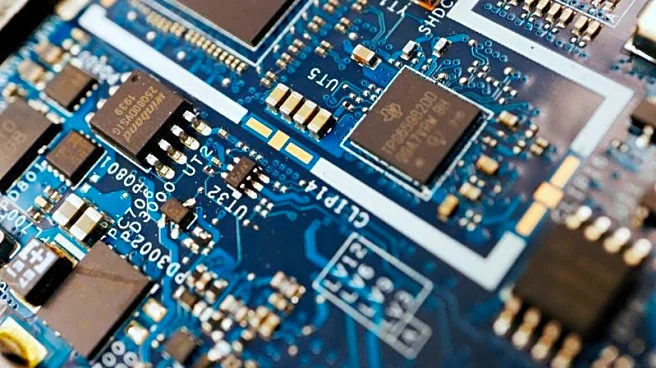
The rapid rise of artificial intelligence (AI) is significantly impacting the market, with a few stocks now accounting for over 30% of the S&P 500. This concentration poses a risk of market contagion, as a stumble in key stocks like Nvidia could have widespread effects. The enthusiasm for AI is evident, with 'AI' being mentioned in 306 S&P 500 earnings calls between September 15 and December 4, a record high. However, this boom is also causing hardware shortages, as the development of AI requires substantial physical resources. Memory chips, GPUs, and other components are in short supply, leading to increased prices. Companies like AMD have announced price hikes for graphics cards, and there are rumors of reduced supply for mid-range and low-end
models. Additionally, the energy demands of AI and data centers are straining the U.S. power grid, with data centers consuming about 5% of the country's peak demand.
Why It's Important?
The AI boom is reshaping the economic landscape, with significant implications for various stakeholders. Investors and companies are heavily investing in AI, but the overvaluation of stocks and resource shortages pose systemic risks. Consumers are likely to face higher costs for technology and essential resources like electricity. The increased demand for energy could lead to higher electricity prices and stimulate investment in alternative energy sources, such as nuclear power. The situation highlights the need for careful management of AI's growth to avoid negative economic impacts and ensure sustainable development.
What's Next?
As AI continues to grow, stakeholders must address the challenges of resource shortages and energy demands. Companies may need to explore alternative supply chains and invest in more efficient technologies to mitigate the impact of shortages. Policymakers might consider regulations to manage the concentration of market power and ensure fair competition. The energy sector could see increased investment in infrastructure to support the growing demands of data centers. These steps are crucial to balance the benefits of AI with its potential risks.
Beyond the Headlines
The AI boom raises ethical and cultural questions about the future of work and technology's role in society. As AI becomes more integrated into daily life, there are concerns about job displacement and the digital divide. Ensuring equitable access to AI technologies and addressing potential job losses will be critical for maintaining social stability. Additionally, the environmental impact of increased energy consumption by data centers calls for sustainable practices and innovations in energy efficiency.