









What's Happening?
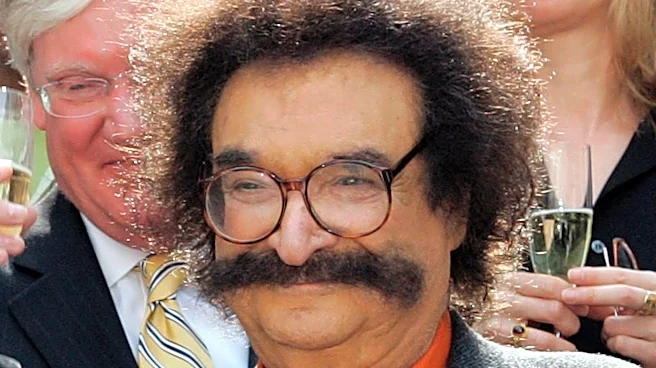
Gene Shalit, the renowned film critic known for his distinctive style and humor, has died at the age of 100. Shalit was a prominent figure on NBC's 'Today' show, where he began contributing in 1968 and became a household name with his segment 'Critic's
Corner' in 1973. His unique approach to film reviews, characterized by wit and a playful demeanor, made him a beloved personality among audiences and Hollywood stars alike. Shalit was known for his interviews with major figures such as Warren Beatty and Sophia Loren, who trusted him to handle sensitive topics with care. Despite some criticism from colleagues, Shalit maintained a successful career until his retirement in 2010. He was also a prolific writer, contributing to various magazines and authoring a humor column. Shalit is survived by his children, having been predeceased by his wife Nancy Lewis and daughter Emily.
Why It's Important?
Gene Shalit's passing marks the end of an era for television film criticism, highlighting the evolution of media personalities and their impact on popular culture. Shalit's career spanned decades during which he became a symbol of approachable and entertaining film critique, influencing how audiences engaged with cinema. His ability to connect with both viewers and celebrities underscored the importance of personality in media, setting a precedent for future entertainment journalists. Shalit's legacy is a testament to the power of humor and individuality in media, offering a contrast to the often serious tone of film criticism. His work also reflects broader changes in television, where personality-driven content has become increasingly prevalent.
What's Next?
While Shalit's death closes a chapter in entertainment journalism, it also prompts reflection on the future of film criticism in the digital age. As traditional media continues to evolve, the role of critics is shifting towards online platforms and social media, where new voices are emerging. This transition may lead to a more diverse range of perspectives in film critique, potentially democratizing the field. Networks and media companies might also explore new formats and personalities to fill the void left by iconic figures like Shalit, adapting to changing audience preferences and technological advancements.
Beyond the Headlines
Gene Shalit's career offers insights into the cultural significance of media figures who bridge the gap between entertainment and journalism. His ability to maintain a light-hearted yet insightful approach to film criticism highlights the potential for media to entertain while informing. Shalit's work also raises questions about the balance between personality and professionalism in journalism, a topic that remains relevant as media landscapes continue to change. His influence extends beyond film criticism, impacting how media personalities are perceived and valued in the broader cultural context.