



What's Happening?
Rio Tinto, a diversified mining company, has announced that it will maintain its 2026 guidance for Pilbara iron-ore shipments, despite recent disruptions caused by cyclones in Western Australia. The company had set a target of shipping between 323 million
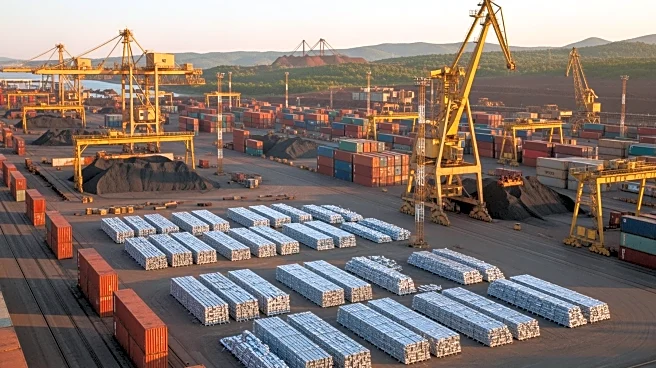
to 338 million tonnes of iron ore. However, the impact of Tropical Cyclone Narelle, a Category 4 system, and Tropical Cyclone Mitchell in February led to an estimated reduction of eight million tonnes in shipments. Despite these setbacks, Rio Tinto plans to recover approximately half of the lost volumes by the end of the year. Port operations in the Pilbara region were temporarily halted, with closures at the company's four iron-ore terminals starting on March 24. Ship loading activities resumed at East Intercourse Island, Parker Point, and Cape Lambert B on March 28, while repairs at Cape Lambert A are ongoing, with shipments expected to restart soon.
Why It's Important?
The decision by Rio Tinto to maintain its shipment guidance is significant for several reasons. Firstly, it underscores the company's resilience and operational capacity to manage and recover from natural disruptions. This stability is crucial for stakeholders, including investors and clients, who rely on consistent supply chains. The Pilbara region is a major hub for iron ore production, and any significant disruption can have ripple effects on global markets, potentially affecting prices and supply chains. By committing to its original guidance, Rio Tinto is signaling confidence in its ability to meet market demands, which can help stabilize market expectations and investor confidence. Additionally, the company's recovery efforts highlight the importance of infrastructure resilience in the face of increasing climate-related disruptions.
What's Next?
As Rio Tinto works to recover lost shipment volumes, the company will likely focus on enhancing its infrastructure resilience to better withstand future natural disruptions. This may involve investing in more robust port facilities and improving operational protocols to minimize downtime during adverse weather events. Stakeholders, including local governments and industry partners, may also collaborate to develop regional strategies for disaster preparedness and response. Furthermore, the company's ability to meet its shipment targets will be closely monitored by investors and market analysts, as it could influence future investment decisions and market dynamics in the iron ore sector.